
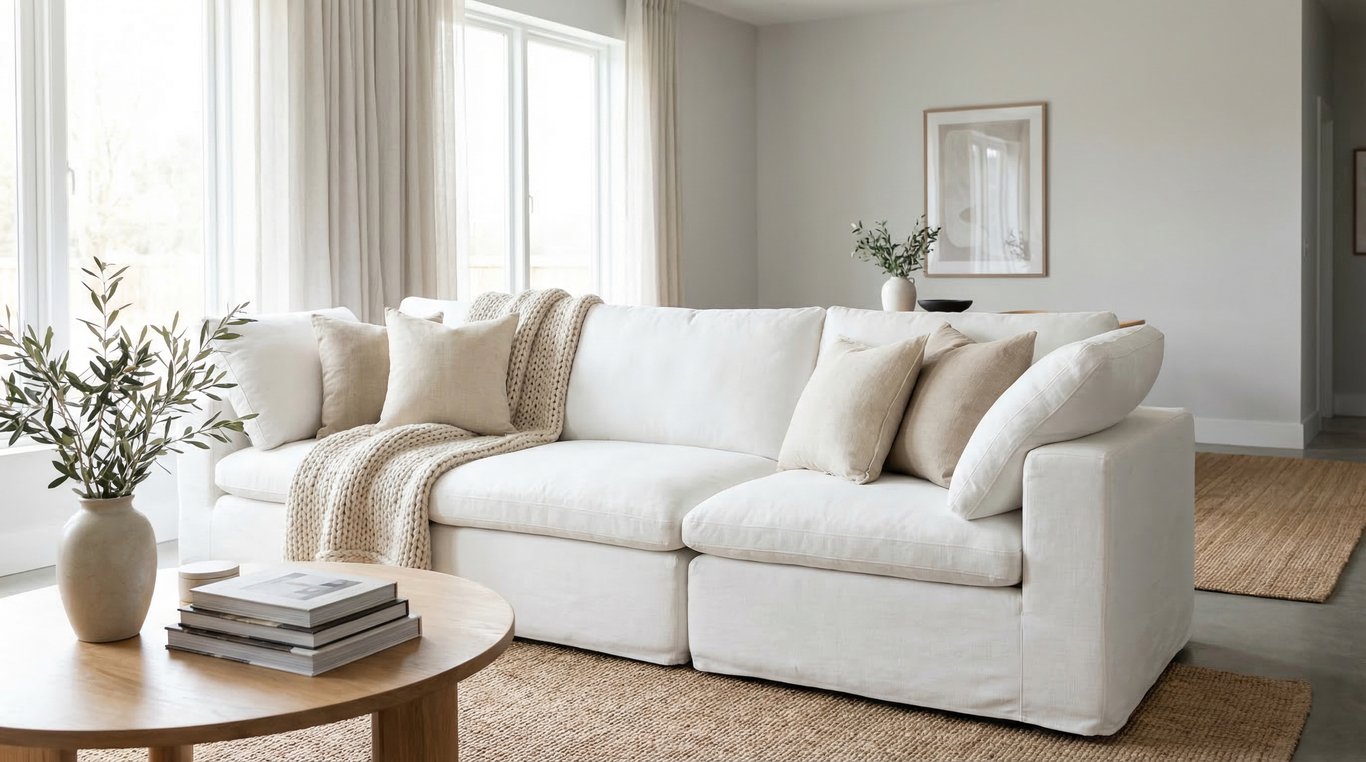

The restoration hardware cloud couch look works in real estate because it signals comfort, scale, and quiet luxury in a single frame. Buyers may not know the exact furniture reference, but they instantly read the room as soft, elevated, and easy to imagine living in.
For agents, marketers, and stagers, the goal is not to copy a showroom or sell a sofa. It is to create the same emotional effect in listing images: a living room that feels plush, expensive, and aspirational without looking overdesigned.
That makes this style especially effective for a cloud couch living room strategy in photos, virtual staging, and visual refreshes of tired spaces. Below, we break down how to recreate the look, when it performs best, and where it helps improve buyer perception.
Why the 'cloud couch' look gets attention in real-estate marketing
What buyers read into oversized soft seating
Oversized, low-profile seating communicates more than furniture preference. In listing photos, buyers often interpret it as:
- A larger, more livable room
- A comfortable everyday lifestyle
- A home designed for gathering and relaxing
- A premium interior with intentional styling
This is why the restoration hardware cloud couch aesthetic keeps appearing in aspirational real estate visuals. It suggests abundance without requiring ornate finishes or bold colors. Even in a simple room, deep cushions and generous proportions can make the space feel upgraded.
Why comfort-coded visuals increase perceived lifestyle value
Comfort-coded visuals are powerful because buyers shop emotionally first. A room that looks soft and welcoming tends to feel more valuable than one that is technically well furnished but visually cold.
In listing images, that means plush luxury often outperforms sparse styling when the room has enough space to support it. The look can also bridge the gap between a standard home and a more premium presentation, especially in hero shots and virtually staged photos for real estate.
The design ingredients behind the look
Silhouette, scale, and seat depth
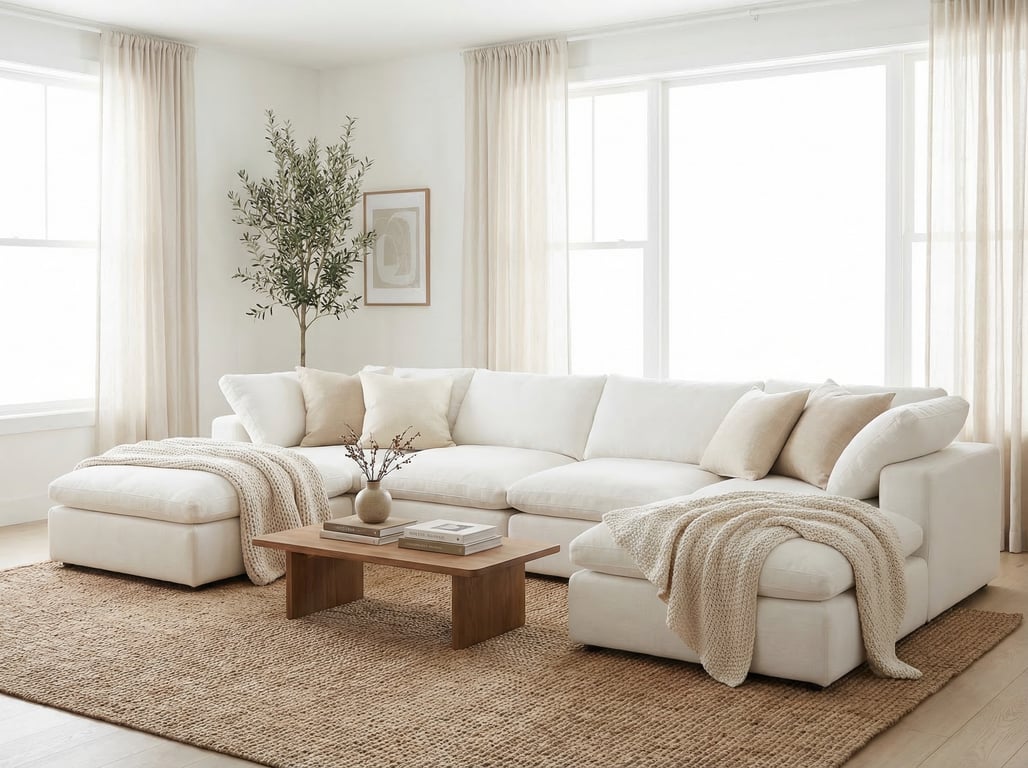
The signature feel comes from three things: low height, broad width, and deep seating. In photos, these features create a grounded, lounge-like silhouette that reads as premium.
To recreate the effect for listings:
- Choose a sofa with a simple, boxy profile
- Favor wide arms or armless modular forms
- Keep seat height visually low
- Use cushions that appear overstuffed but still tailored
- Match sofa scale to room size so it looks generous, not crowded
If the room is smaller, reduce width before reducing softness. A compact sofa with plush proportions usually photographs better than a large sectional squeezed wall to wall.
Fabric, color palette, and lighting
The look is less about one exact piece and more about tonal consistency. Linen-like textures, performance boucles, and matte woven upholstery work well because they absorb light softly rather than reflecting it harshly.
Best color directions for listings include:
- Warm white
- Oatmeal
- Soft greige
- Sand
- Light taupe
Pair those neutrals with natural light, sheer window treatments, and gentle contrast. Avoid bright optical whites unless the room already has strong architectural warmth. Slightly creamy tones usually feel more expensive on camera.
What makes a room feel expensive on camera
Luxury perception in listing photos comes from restraint. A high-end living room style for listings usually includes fewer objects, larger forms, and stronger negative space.
Use this checklist:
- One substantial sofa instead of multiple competing seats
- A large rug that extends beyond the seating zone
- A coffee table with visual weight, such as wood, stone, or plaster
- Minimal but sculptural accessories
- Layered lighting with daylight as the hero
- Neutral styling that lets shape and texture carry the image
If you want a softer related direction, organic modern living room ideas can complement this aesthetic without losing the upscale feel.
How to recreate the effect without copying a showroom
Layout choices for small, medium, and open-plan living rooms
The best layout depends on the room footprint.
Small living rooms
- Use an apartment-sized sofa or two-piece modular
- Float it slightly off the wall if possible
- Keep side tables narrow and open
- Leave clear walking space so the room still reads functional
Medium living rooms
- Anchor the space with one deep sofa and one accent chair
- Center the arrangement on a rug large enough to hold all front legs
- Keep the coffee table low and broad to reinforce the lounge feel
Open-plan living rooms
- Use a sectional or modular arrangement to define the zone
- Maintain breathing room around the perimeter
- Repeat tones across nearby dining or kitchen sightlines for cohesion
In every case, the room should look easy to enter and easy to use. Plush styling fails when circulation paths feel blocked.
Styling with rugs, coffee tables, and accent pieces
To create a luxury sofa look for staging photos, support the seating with pieces that feel substantial but quiet.
Best supporting elements:
- Oversized area rug in a low-contrast pattern
- Rounded or rectangular coffee table with softened edges
- One large tray or stack of books instead of many small items
- Textural throw pillows in similar tones
- A single statement branch, bowl, or ceramic object
Avoid fussy accessories, busy metallics, and small-scale decor. They break the calm mood and make photos feel less premium.
Mistakes that make luxury rooms photograph flat
Some rooms have expensive-looking items but still underperform in photos. Common reasons include:
- Sofa too small for the wall or camera angle
- Rug undersized so the seating floats awkwardly
- Too many accent pillows creating clutter
- Weak contrast between sofa, wall, and floor
- Harsh overhead light flattening texture
- Styling that ignores the home's architecture
This is where contrast matters. If the property has sharper lines, floor-to-ceiling glass, or more architectural detailing, a plush room may need cleaner edges. In those cases, clean lines interior design may be a better reference than full lounge-heavy styling.
When to show the look virtually in listing images
Vacant homes
Vacant homes often feel colder and smaller than they are. A cloud-couch-inspired setup can instantly add scale reference, warmth, and lifestyle context.
This works especially well when the living room is a key decision-making space and buyers need help understanding where a conversation area would go.
Dated living rooms
If the room has outdated furnishings, replacing them digitally can be more effective than trying to style around them. This is where understanding virtual staging vs home staging helps. If the issue is mainly presentation in photos, digital styling may deliver the strongest return.
For rooms with complicated layouts, awkward proportions, or multiple target buyer profiles, expert planning from home stagers for real estate agents can help determine whether soft luxury is the right visual direction.
Luxury and aspirational mid-market listings
This look performs best when the listing benefits from an elevated lifestyle cue. That includes:
- Higher-end resale properties
- Newer suburban homes with open living areas
- Mid-market listings competing on visual polish
- Homes marketed to buyers who respond to comfort and design trends
Used well, the style makes a listing feel editorial rather than generic.
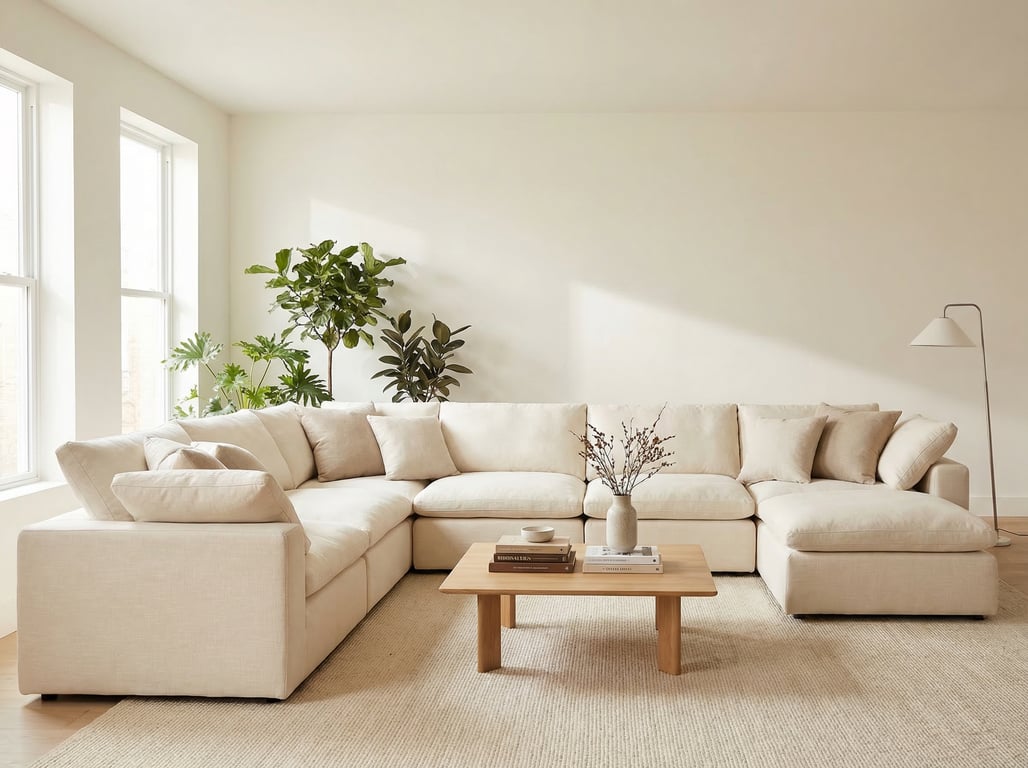
Cloud-couch-inspired before-and-after concepts for agents
Best angles to visualize
The most effective angle is usually the widest natural view that shows:
- The full seating zone
- Window light
- A clear path through the room
- Relationship to fireplace, built-ins, or adjacent spaces
Corner-to-corner shots often work best because they show both softness and scale. Straight-on shots can work too, but only if the wall composition is strong.
How many hero images to produce
In most listings, one to three key living room visuals are enough:
- One wide hero image for the main gallery
- One alternate angle showing function and flow
- One supporting lifestyle image if the room is a major selling point
More than that can dilute the impact unless the living room is exceptional. Focus on fewer, stronger images rather than repeating similar views.
Where to use them in listings and ads
Use the strongest cloud-couch-inspired visual in:
- The listing gallery lead image set
- Property landing pages
- Social ads for lifestyle-led campaigns
- Email marketing teasers
- Retargeting creative for premium inventory
The look is especially effective when the room needs a standout lifestyle anchor. That is why so many agents rely on polished, buyer-facing virtually staged photos for real estate to carry the visual story.
Is this style right for your property type?
Urban condo
Sometimes. In compact condos, the aesthetic should be interpreted lightly rather than literally. Use a lower-profile sofa, restrained accessories, and more open floor space. If the room is tight, oversized seating can make the space feel smaller in photos.
Suburban family home
Usually yes. Family-oriented buyers often respond well to soft, livable spaces that imply comfort and gathering. This property type is one of the strongest matches for a cloud couch living room presentation.
High-end resale
Yes, if the architecture supports it. In upscale resale, the style can reinforce luxury without relying on flashy decor. The key is to keep the look edited, substantial, and aligned with the home's finishes.
Key takeaways
- Keep the page focused on the style/look and its listing-performance value, not furniture shopping.
- Use commercial framing: recreate the buyer appeal, visualize the look, improve listing images.
- Differentiate from generic decor content by tying every section to photography, listing presentation, and buyer perception.
- Include nuanced guidance on when plush luxury styling helps versus when it overwhelms compact rooms.
FAQ
What defines the cloud couch look in a living room?
It is defined by deep, oversized seating, a low profile, soft cushions, tonal neutrals, and a calm, spacious layout that feels plush and elevated on camera.
Can you create a cloud-couch-inspired room without buying the exact sofa?
Yes. The effect comes from silhouette, scale, texture, and styling. You can recreate the buyer appeal with similar proportions and a restrained luxury palette.
Does this style work for small living rooms in property listings?
Yes, but it needs adaptation. Use smaller-scale seating with the same soft profile, keep pathways open, and avoid crowding the room with bulky extras.
When should agents use luxury-style virtual staging in listing photos?
Use it when a room is vacant, dated, or visually underwhelming and the listing would benefit from stronger lifestyle appeal in online marketing.