
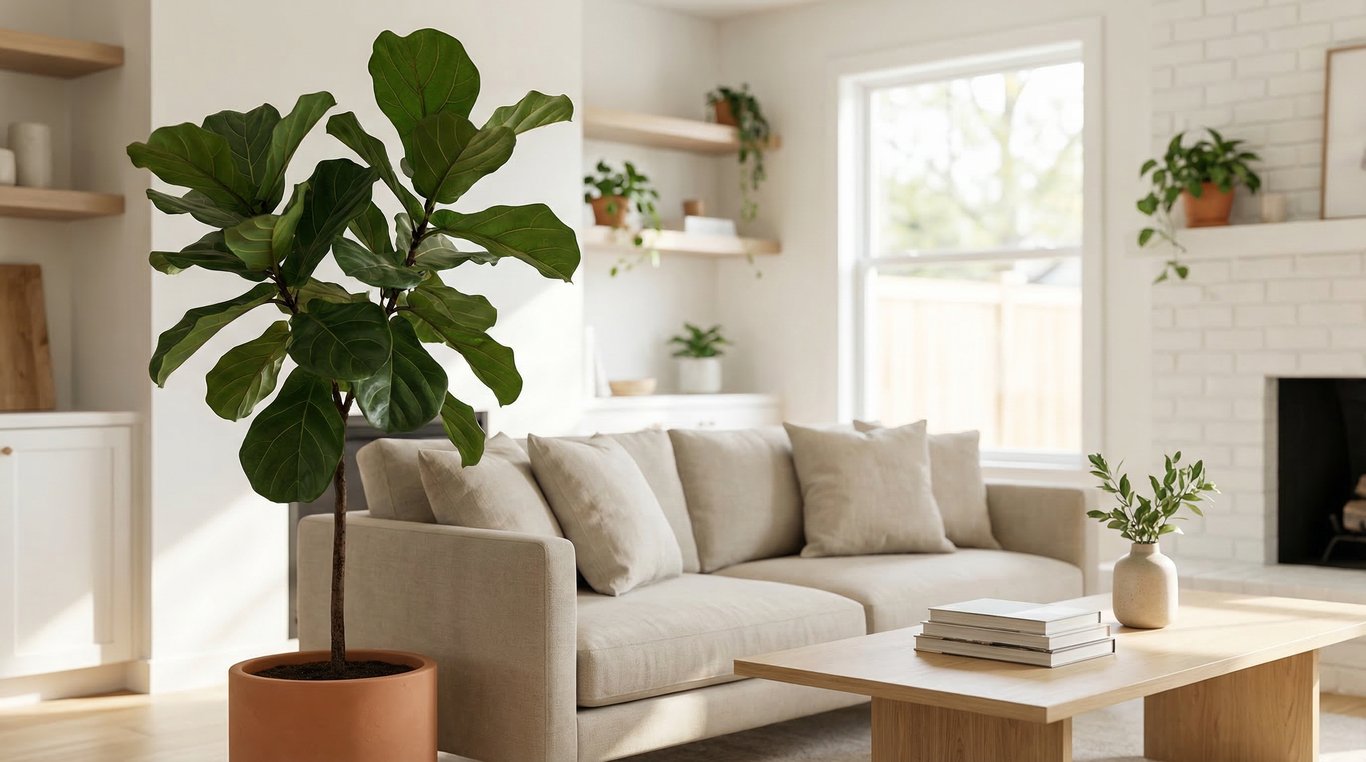

When a room looks too empty, listing photos can feel cold, unfinished, or hard to imagine living in. That is where interior decoration plants can help. Used well, greenery adds softness, scale, and a subtle lived-in quality without distracting from the property itself.
For agents, stagers, and sellers, the goal is not to turn a home into a plant showcase. It is to use interior decor with plants to make rooms photograph better, feel more inviting, and support stronger before-and-after visuals. In many cases, a few carefully placed plants can do more for perceived warmth than extra decor accessories.
This guide focuses on property marketing, not plant care. If you are comparing staged concepts, working with an interior decorator for real estate agents, or planning listing updates, these ideas will help you choose greenery that improves photos without adding clutter.
Why plants improve listing photos and perceived move-in appeal
How greenery softens empty or sterile rooms
Empty corners, plain countertops, and hard architectural lines can make photos feel stark. A single plant introduces shape, texture, and a more natural focal point. That matters especially in rooms with a lot of white, gray, stone, or flat-painted surfaces.
In listing photography, plants work best when they:
- break up dead space
- soften sharp furniture edges
- add subtle color variation
- make neutral rooms feel intentional rather than unfinished
This is one reason interior decoration plants often outperform extra small accessories. One medium plant can create warmth faster than several decorative objects, while keeping the image cleaner.
Where plants help buyers read scale and function faster
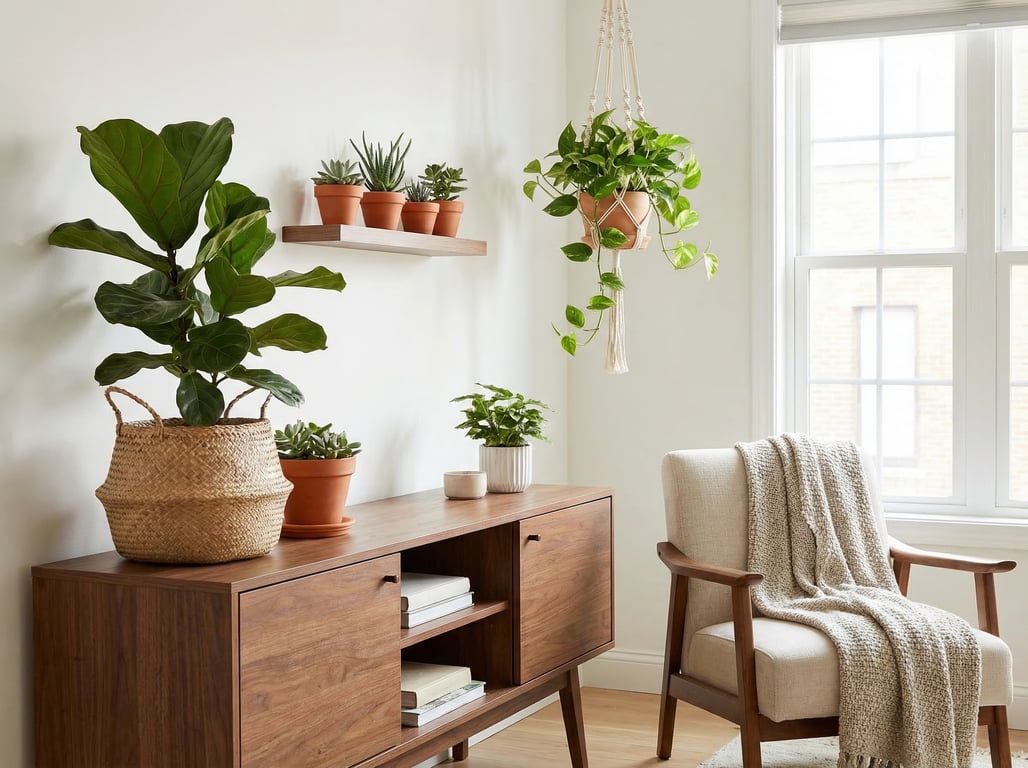
Plants can also help buyers understand how a room works. In a photo, a plant near a bench, console, or reading chair helps define use. In an empty room, that visual cue makes scale easier to read.
Helpful placements include:
- beside an entry console to anchor arrival space
- near a living room armchair to suggest a reading corner
- on open shelving to add depth without overcrowding
- on a kitchen counter corner to show usable surface area while keeping it mostly clear
This is especially useful in compact rooms, where buyers need quick visual cues. The right greenery supports the layout instead of competing with it.
When plants hurt listing photos instead of helping
Plants become a problem when they pull attention away from the room. Overgrown leaves, dark bulky pots, and too many small planters can make photos feel messy.
Avoid plant styling that:
- blocks architectural features or light
- covers valuable counter or floor space
- introduces too many shapes in one frame
- looks unrealistic for the room's light level
- feels more decorative than strategic
If your goal is marketability, every plant should earn its place in the shot.
Plant styling by room for marketable before-and-after visuals
Entryway plant placement that feels welcoming
The entryway is one of the easiest places to add greenery because a little goes a long way. A slim floor plant near the door or a small plant on a console can make the home feel more finished from the first image.
If you are also planning other arrival-zone upgrades, these entryway decor ideas pair well with simple greenery.
Best practices:
- choose narrow profiles that do not crowd the walkway
- keep planters neutral and matte
- use one focal plant rather than several tiny accents
- align the plant with a bench, mirror, or console for structure
Living room corners, shelves, and coffee table balance
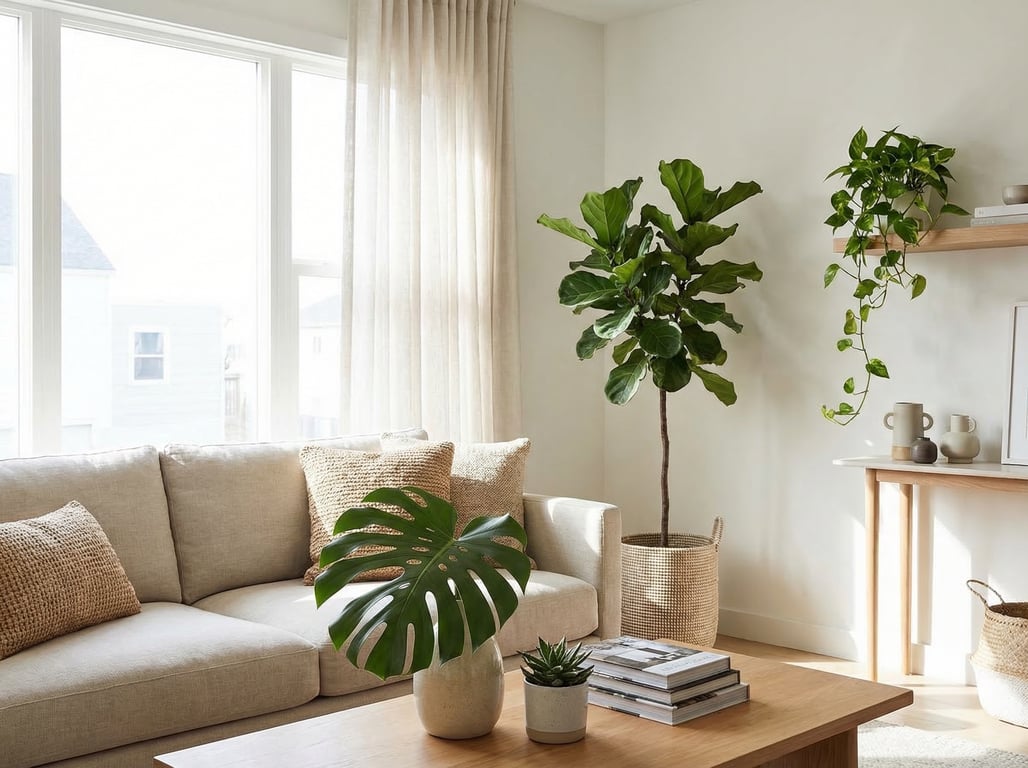
Living rooms benefit most when plant placement supports composition. One floor plant in a dead corner can balance a sofa wall. A small stem arrangement or compact potted plant on a coffee table can soften the center without hiding the surface.
Strong options include:
- one medium floor plant in a bright corner
- one shelf plant on an otherwise sparse built-in
- one low-profile tabletop plant for the coffee table
Keep the room readable. If the sofa, rug, and art already create a strong visual story, the plant should be a finishing touch, not the lead subject.
Kitchen herbs and minimal greenery for clean surfaces
Kitchens photograph best when surfaces look open and functional. That means greenery should be minimal. A small herb pot, a simple stem vase, or one compact plant in a corner usually works better than multiple decorative items.
In kitchen shots:
- keep islands nearly clear
- avoid spreading planters across every counter
- use greenery near windows or tucked into a back corner
- choose forms that reinforce cleanliness and simplicity
The best plants for real estate photos in kitchens are often the least noticeable. They add life while preserving the impression of workspace.
Bathroom and bedroom plant choices that stay low-maintenance
Bathrooms and bedrooms need restraint. In bathrooms, a single small plant on a vanity corner, stool, or shelf can make the room feel spa-like. In bedrooms, a plant can soften an empty dresser top or fill a blank corner without making the space feel crowded.
Choose options that look believable for the space. Low-light rooms should not feature large tropical plants that feel staged only for the camera. In these rooms, natural elements interior design works best when the styling remains subtle and realistic.
Matching plant decor to home style and buyer expectations
Organic modern and neutral staging looks
In organic modern spaces, greenery should reinforce calm textures and a muted palette. Think sculptural leaves, simple ceramic planters, and placements that echo the room's lines.
If your listing leans in that direction, these organic modern living room ideas can help you match plant choices to the broader staging story.
For this style:
- use earthy or off-white pots
- favor fewer, more sculptural plants
- avoid bright plastic planters or overly colorful blooms
- place greenery where it supports softness and negative space
Small-space condos vs family homes
Small condos need plant styling that preserves openness. One tall narrow plant or one small tabletop piece is often enough. Too many objects in a compact room can make the listing feel smaller than it is.
Family homes usually allow more flexibility. A larger living room, entry, or covered patio can handle a few more green accents, especially if the goal is to make the home feel move-in ready for everyday life.
A simple rule:
- small-space condo: 1 focal plant per main room
- average family home: 1 to 2 well-spaced plant moments per main room
Luxury listings vs budget-conscious remodels
Luxury homes benefit from refined understatement. Large statement plants can work, but only if they match the scale of the architecture. Clean containers, tailored placement, and symmetry often matter more than variety.
Budget-conscious remodels benefit from showing that small styling upgrades can transform presentation. Here, interior decor with plants helps bridge the gap between a plain renovation and a polished marketing image. The greenery makes the update feel complete without requiring expensive decor packages.
Common plant styling mistakes in property marketing
Oversized pots that shrink the room visually
A pot that is too wide or too dark can visually eat floor space. In photos, this can make the room feel tighter and reduce the impact of the layout.
Instead:
- choose pots proportional to the room
- avoid heavy bases in small rooms
- use lighter tones when you want the space to feel open
The plant should add dimension, not make the square footage feel compromised.
Too many small plants creating visual noise
Clusters of tiny plants often look charming in person but messy in listing photos. Multiple small items create too many focal points, especially on shelves, counters, and window ledges.
If you want the room to read clearly in a thumbnail or search result image, fewer is better. One well-placed plant usually beats five miniature accents.
Low-light spaces with unrealistic plant choices
Buyers notice when styling feels fake. A bright, tropical-looking plant in a dark interior bathroom may not be consciously analyzed, but it can still make the scene feel less believable.
Use realistic choices for the setting and keep the goal focused on visual credibility. Good plant styling supports trust in the image as much as beauty.
How to test plant-led renovation and decor ideas before committing
Using visual mockups to compare empty vs styled rooms
Before buying planters or moving items around for a shoot, compare concepts digitally. This is one of the easiest ways to test plant-led before-and-after ideas and see which rooms actually benefit from greenery.
Tools that generate virtually staged photos for real estate are especially useful here. You can assess whether a corner needs a tall plant, whether a shelf looks better styled or clear, and whether the room still feels spacious.
Choosing changes that photograph well across multiple rooms
Not every styling idea scales well across a full listing. The best choices are repeatable: similar pot finishes, a consistent greenery style, and placements that feel cohesive from room to room.
When reviewing mockups, ask:
- Does the greenery improve the photo at first glance?
- Does it make the room feel warmer without feeling crowded?
- Does it suit the home's price point and style?
- Can the same styling logic work in multiple spaces?
If the answer is yes, you are more likely to get a polished listing set instead of a collection of disconnected rooms.
Turning styled concepts into clearer CTAs for sellers and agents
Plant styling is not just about aesthetics. It can support stronger seller conversations and clearer service positioning. Showing a seller an empty room beside a lightly styled version helps explain why small changes may improve photo performance.
An AI decorating app can make that process faster by letting you preview multiple styled directions from real property photos before anyone spends money on physical decor.
That makes the CTA simple: compare a few realistic concepts, choose the version that photographs best, and move forward with confidence.
Key takeaways
- Keep the angle on property marketing visuals, not general houseplant care.
- Use before/after framing to support CTA intent naturally.
- Position plants as a low-cost visual upgrade that can make renovation concepts feel more believable.
- Include realistic examples of where greenery adds value in listing photography.
- Close with a light trial-oriented CTA around previewing multiple styled directions from real property photos.
FAQ
Do plants make real estate photos look better?
Yes, when used selectively. Interior decoration plants can soften sterile rooms, add scale, and make listing photos feel warmer without distracting from the property.
What rooms benefit most from plant styling before listing?
Entryways, living rooms, kitchens, bedrooms, and bathrooms can all benefit, but the biggest gains usually come from entry corners, living room dead space, and minimally styled kitchen surfaces.
How many plants should you use in a staged room photo?
Usually one focal plant or one to two plant moments per room is enough. Too many plants create visual noise and can make the room look smaller.
Can you preview plant decor ideas before buying anything?
Yes. Using mockups or digital staging lets you test interior decoration plants in real listing photos before purchasing decor, which helps you compare options and avoid unnecessary styling costs.