


Hiring an interior decorator for a real estate listing is often less about personal taste and more about buyer psychology: clarity, flow, and broad appeal in photos and showings.
If you’re an agent (or a homeowner preparing to list), the decision usually comes down to three things: what the home needs (styling vs. repairs vs. layout fixes), how fast you need it done, and whether you need physical changes or marketing visuals.
This guide breaks down what decorators actually do for listings, when hiring one makes sense, what you should expect to receive, and how virtual services and AI visualization can sometimes cover the gap.
What is an interior decorator (in real estate terms)?
An interior decorator (in real estate terms) is a styling professional who improves a home’s presentation for buyers using furnishings, decor, color, and finishes—without changing the structure or requiring architectural plans.
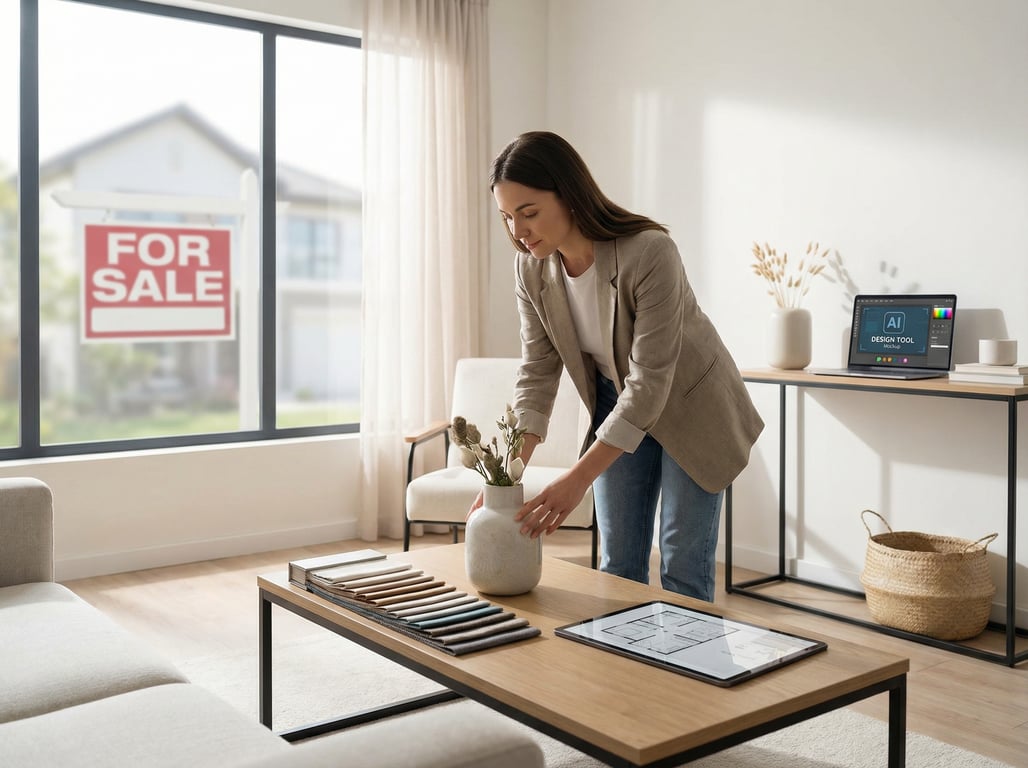
For listings, the goal isn’t to create a highly personal home. It’s to create a space that:
- Photographs cleanly and consistently
- Feels more spacious and brighter
- Helps buyers understand how rooms function
- Minimizes distractions (visual noise) and highlights selling points
Decorator vs. interior designer (quick comparison)
Here’s a simple, listing-focused comparison you can use to decide who you actually need.
| Role | Best for | Typical scope | What they usually don’t do |
|---|---|---|---|
| Interior decorator | Styling for buyer appeal | Furniture selection, accessories, paint colors, light cosmetic updates | Structural changes, permitting, engineered plans |
| Interior designer | Bigger functional changes + aesthetics | Space planning, kitchen/bath design direction, specs with trades | Fast, minimal-touch listing prep (often overkill) |
| Home stager | “Sell-ready” presentation | Staging strategy, furniture rental, styling for photos/showings | Custom renovations or deep redesign |
| Virtual staging / AI visualization | Marketing images and concept testing | Digitally furnishes/refreshes rooms for listing photos | Physical changes to the home itself |
If your needs involve removing walls, changing plumbing locations, or anything requiring permits/trade coordination, you’re usually outside decorator territory.
What decorators typically change for listings (furnishings, styling, finishes—non-structural)
For real estate, decorators typically focus on high-impact, low-risk improvements such as:
- Furniture edits: remove bulky pieces, re-balance room scale, add missing anchor items
- Styling + accessories: pillows, throws, art, greenery, table settings (kept neutral)
- Color and finish guidance: paint color suggestions, hardware swaps, lighting temperature guidance
- Room function clarity: staging a “mystery area” as a desk nook, reading corner, or dining zone
- Photo-readiness: simplifying shelves and surfaces, aligning rugs, hiding cords, decluttering sightlines
When to hire an interior decorator for a listing
You’ll get the most ROI from a decorator when the home is fundamentally in good shape but isn’t presenting well—especially online.
Vacant vs. occupied homes
- Vacant homes: Decorators can define room purpose and scale, but many sellers/agents choose a stager (furniture rental + placement) or virtual staging for marketing photos.
- Occupied homes: Decorators often shine here—editing existing items, improving layout, and directing what to store, replace, or re-style.
A practical rule: if the home looks “fine in person” but “flat in photos,” decorating and styling usually move the needle.
Price-point and market-speed considerations
Consider hiring an interior decorator when:
- You’re competing with newer inventory and need a perception lift
- Days-on-market matters (e.g., hot season timing or a tight marketing window)
- Your buyer pool expects turnkey presentation (common in many mid-to-upper price bands)
If you’re in a market where homes sell regardless of presentation, a lighter-touch approach (DIY + AI concepts) can still help you win the click online.
Common listing scenarios (dated living room, small bedroom, awkward layout)
Decorators are especially useful for:
- Dated living room: modernizing with paint, lighting direction, simplified styling, and better scale
- Small bedroom: right-sized bed, minimal nightstands, airy bedding, and mirror placement guidance
- Awkward layout: defining zones (conversation area vs. dining) and creating a clear walking path
What an interior decorator usually delivers
Deliverables vary widely, so it helps to ask for specifics before you book.
Room-by-room styling plan
Common outputs include:
- Recommended furniture layout(s)
- Styling rules for each room (what to remove, what to add, what to keep)
- Color guidance (paint, textiles, metals) aimed at broad buyer appeal
- Photo priorities (which angles to protect by decluttering)
Shopping list / sourcing
Depending on the engagement, a decorator may provide:
- A curated shopping list (often with links/SKUs)
- “Good-better-best” alternates by budget
- Notes on what to buy vs. what to borrow/rent
If you need sourcing done fast, confirm whether they can purchase on your behalf, or whether you’re expected to execute the list.
On-site staging day vs. remote consult
- On-site: best when you need hands-on layout changes, styling, and real-time adjustments.
- Remote/virtual interior decorator: best when you can execute (or have a helper) and want expert direction without travel.
Virtual support is also useful if you’re listing in a different city or managing multiple properties.
Before/after expectations (what can and can’t be changed)
Decorators can dramatically improve:
- Visual cohesion
- Perceived brightness and space
- Photo-readiness and buyer focus
They generally can’t fix:
- Poor natural light (without real lighting upgrades)
- Significant deferred maintenance
- Structural/layout constraints that require construction
Costs: how interior decorators charge for staging-related work
Pricing varies by market and scope, so it’s smarter to compare models and cost drivers than to anchor on dollar amounts.
Hourly vs. flat-fee vs. day-rate (pros/cons)
- Hourly: flexible for small consults; can be harder to cap if scope expands
- Flat-fee: clearer budget for defined deliverables; requires a well-written scope
- Day-rate: good for “staging day” execution; best when decisions are made upfront
Ask what’s included (and what isn’t): revisions, travel, sourcing time, shopping, install, and follow-up.
What impacts cost (scope, number of rooms, sourcing, travel)
Cost typically rises with:
- More rooms photographed/staged
- Vacant installs (more items needed)
- Sourcing complexity (custom orders, multiple vendors)
- Travel time and scheduling constraints
- Rush timelines before photo day
Budget tiers for agents and homeowners (framework, not invented prices)
A practical framework for planning:
- Light touch: 1–2 rooms, declutter + layout + styling using existing items
- Mid scope: main living areas + primary bedroom, plus targeted purchases
- Full listing prep: most photographed spaces, coordinated sourcing, possible rental coordination
To keep spend controlled, align the scope to the marketing plan: stage what will be photographed and shown first.
Virtual options: remote decorators, virtual staging, and AI visualization
If your main goal is better listing photos and stronger online conversion, virtual-first solutions can be a fast alternative—or a complement to physical decorating.
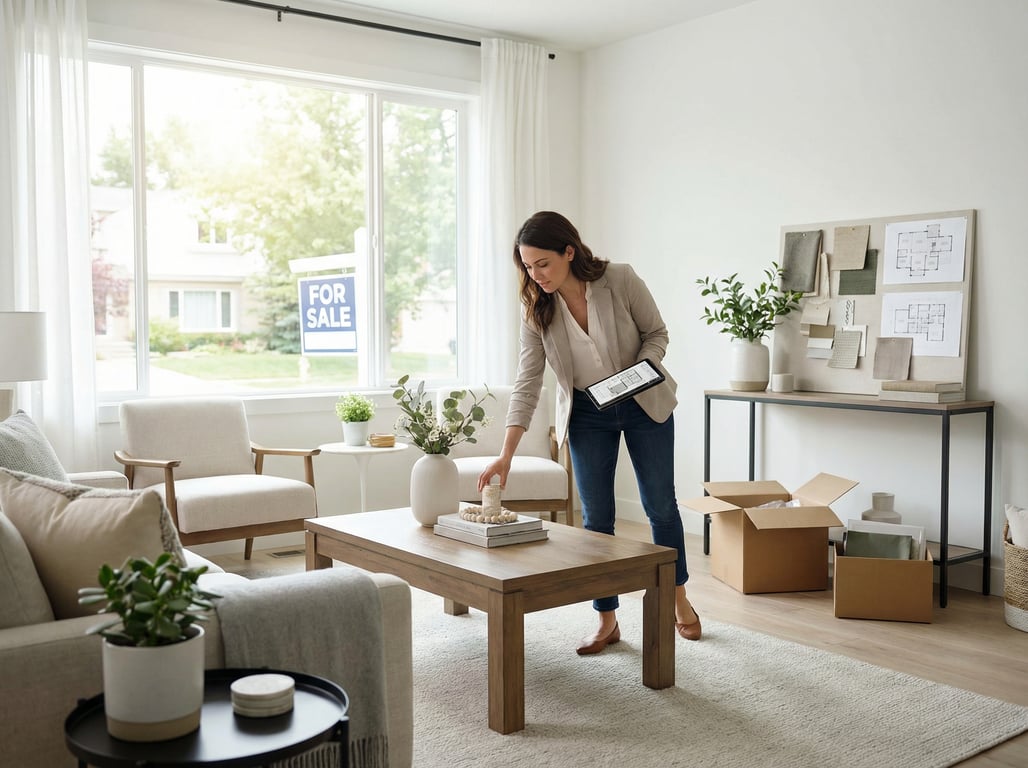
Virtual staging vs. renovation visualization vs. decor concepts
These get mixed up, but they solve different problems:
- Virtual staging: digitally adds furniture/decor to empty (or lightly furnished) rooms to improve listing photos.
- Renovation visualization: shows potential updates (floors, paint, cabinetry, fixtures) to help buyers see “after.”
- Decor concepts (AI or human): style exploration (modern, Scandinavian, transitional) to decide a direction.
If you’re producing photorealistic marketing visuals beyond simple staging, you may also hear rendering terms like a digital media renderer for real estate.
When AI visuals are enough (pre-listing marketing, test styles) vs. when you still need a pro
AI and virtual tools can be enough when you need:
- A fast way to test multiple styles before buying anything
- Pre-listing marketing assets to validate positioning (e.g., “modern update potential”)
- Coverage for vacant rooms where physical rental isn’t feasible
A low-cost starting point is experimenting with free AI room design for real estate to explore directions and narrow preferences.
You still likely need a decorator (or stager) when:
- The home is occupied and requires edit/organization and physical re-layout
- You need cohesive styling across rooms for showings (not just photos)
- There are on-the-ground constraints (odd furniture scale, worn textiles, clutter, pet items)
For tools specifically built around listing workflows, see AI virtual staging apps for real estate agents. For quick concept previews, an AI decorating app can help you iterate on style direction before committing to purchases.
How to brief any tool/service for better results (photo quality, room notes, style direction)
Whether you’re briefing a human decorator, a virtual stager, or AI, your output improves with a better input.
Use this briefing checklist:
- Photos: bright, level, wide enough to show the whole room; minimize motion blur
- Room facts: dimensions (approx.), ceiling height, key fixed elements (fireplace, windows)
- Constraints: what stays (sofa, dining table), what must go, pet/kid considerations
- Target buyer + comps: “similar to X listing style,” neighborhood expectation, price point
- Style direction: 2–3 adjectives (e.g., warm-modern, airy, minimal) and 2–3 “avoid” notes (e.g., no bold wallpaper)
- Timeline: date of photography, listing date, and how many revision rounds you need
If you want DIY tools
If you’re not ready to hire and want to experiment on your own, review the best interior design apps to mock up layouts and mood boards before bringing in a pro.
Checklist: choosing the right interior decorator for a listing
Use this section as a quick screening tool and as “questions to ask before hiring.”
Portfolio fit (listing-ready, neutral buyer appeal)
Look for:
- Bright, neutral, broadly appealing spaces (not overly themed)
- Before/after examples that show improvement in clarity and scale
- Work that matches your typical inventory (condos vs. suburban homes vs. luxury)
Ask: “Do you have examples specifically prepared for listing photos and open houses?”
Turnaround time and revision policy
Confirm:
- How quickly they can deliver a plan (especially if photo day is soon)
- Whether revisions are included (and how many)
- What happens if the scope expands mid-project
Licensing/insurance considerations (if applicable locally)
Many decorators focus on aesthetics and may not need licensing for styling work, but it’s still smart to ask:
- Do they carry liability insurance (especially for on-site install days)?
- If contractors are involved (painting, electrical), who hires and insures them?
If your project crosses into construction, you may need different credentials and trade partners.
Deliverables you should request (shot list, style boards, room plan)
To reduce back-and-forth, request:
- A room-by-room plan with priorities (what to do first)
- A style/mood board (or reference images) aligned to buyer expectations
- A shopping list with alternates
- A photo shot list (angles to capture + how to prep each angle)
- Clear notes on what will physically change vs. what is only a concept
Key takeaways
- Keep positioning real-estate-first: buyer appeal, faster sale, higher perceived value, and marketing assets.
- Avoid overpromising; clarify that decorators typically don’t do structural remodeling (permits/architects).
- Differentiate clearly from existing "best interior design apps" by focusing on hiring/decision criteria + comparing to virtual/AI options.
- Add a simple comparison table: Decorator vs Designer vs Stager vs Virtual Staging/AI Visualization.
FAQ
What is the difference between an interior decorator and an interior designer?
An interior decorator focuses on styling (furnishings, color, finishes) without structural changes. An interior designer may handle space planning and remodel-level decisions that can involve trades and permits.
Do I need an interior decorator or a home stager to sell my house?
Choose a decorator if you need a styling plan and help using (or editing) what you already have. Choose a stager if you need furniture rental and a photo/showing-ready setup, especially for vacant homes.
Can an interior decorator work virtually for a real estate listing?
Yes. A virtual interior decorator can deliver layouts, styling instructions, and shopping lists remotely—best when you (or your team) can execute the changes on-site.
How long does it take to decorate a house to sell?
It depends on scope and sourcing. A consult and styling plan can be quick, while sourcing items and coordinating an install can take longer—especially if shipping or trades are involved.
Is virtual staging better than hiring an interior decorator?
Virtual staging is often better for creating strong listing photos quickly (especially for vacant rooms). Hiring an interior decorator is better when you need real, physical changes that improve showings and the lived-in presentation.