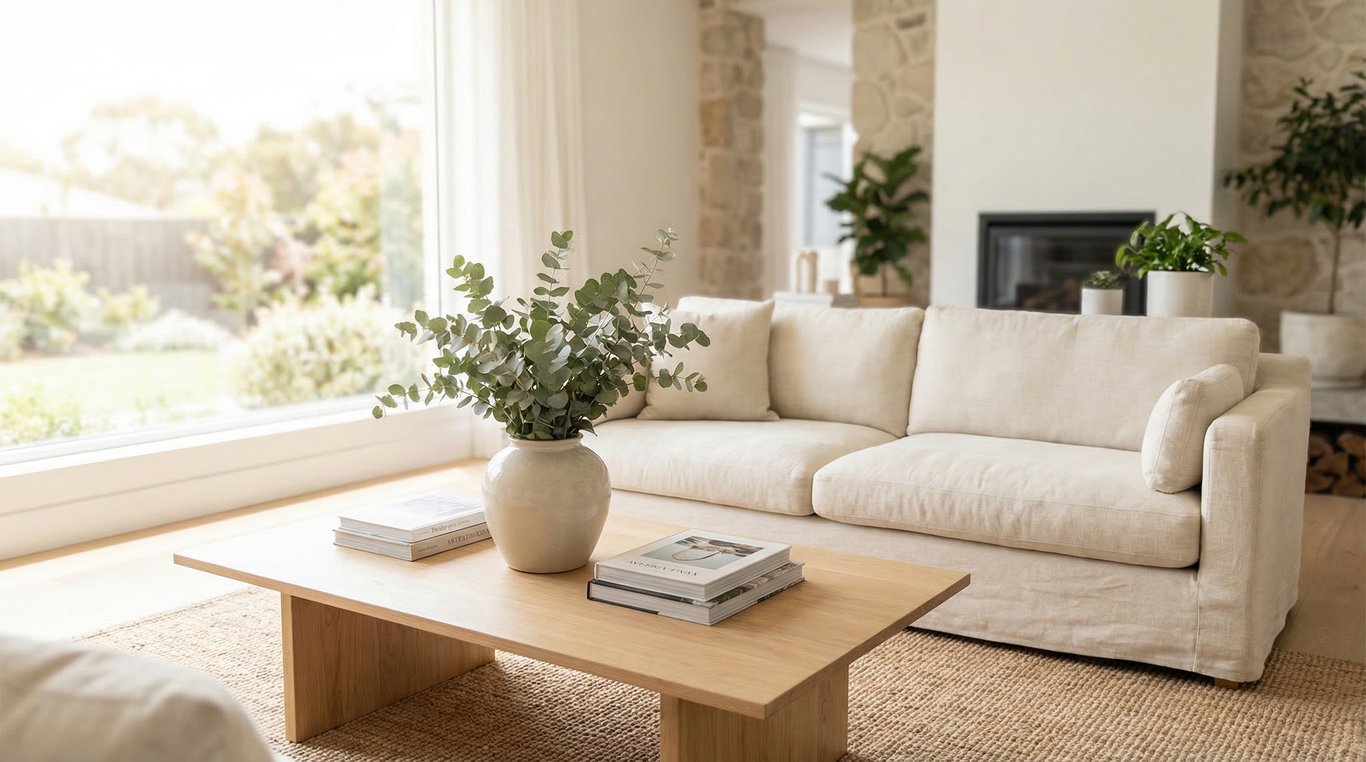

Natural elements interior design is one of the most effective ways to make a listing feel updated without pushing it into a narrow trend. For agents, sellers, and renovators, the goal is not just to decorate a room. It is to create spaces that read as calm, clean, bright, and valuable in photos and in person.
This approach works especially well when a home needs a softer, more current visual identity before hitting the market. Wood tones, daylight, stone-like textures, greenery, and layered textiles help buyers imagine better living quality, even when the renovation budget is limited.
In property marketing, that matters. Buyers often make emotional judgments from listing photos in seconds. A nature-led visual strategy can help a home feel newer, more cared for, and easier to personalize.
If you are deciding between quick staging, finish updates, or visualization before spending money, this guide breaks down how to use natural elements interior design for listings in a practical, camera-first way.
What natural elements interior design means in a property marketing context
Natural elements interior design is a styling and renovation framework that uses materials, colors, light, and texture associated with nature to improve how a home feels to buyers. In listings, that means creating rooms that feel breathable, warm, and visually balanced rather than overly decorated.
For real estate, this is less about trend language and more about buyer perception. The style helps outdated interiors photograph with more softness and depth, which can make finishes look newer and layouts feel more inviting.
Core features buyers notice first
Buyers usually notice a few signals immediately:
- Warm wood or wood-look finishes
- Neutral color palettes with cream, sand, taupe, or clay undertones
- Natural-looking textures such as linen, stone, ceramic, and woven materials
- Better use of daylight and softer lighting
- Reduced visual clutter
These signals tell buyers that a home feels maintained and current. Even modest spaces can appear more premium when the palette is cohesive and the materials feel grounded instead of synthetic.
How this style differs from generic organic modern decor
Natural elements interior design is broader than a specific look like organic modern. Organic modern often leans minimalist and editorial. Natural elements can include that direction, but it also works across traditional, transitional, coastal, and even select luxury homes.
For example, a seller might borrow ideas from organic modern living room ideas for listings, but the broader natural-elements approach gives more flexibility. It focuses on what reads well to buyers on camera, not just what fits one decor label.
Why it works especially well in listing photos
Listing photos reward contrast, texture, and clarity. Natural materials create subtle variation that helps rooms look dimensional rather than flat.
A limewash-style wall, oak-toned table, soft rug, and filtered daylight can make a room feel richer without adding visual noise. This is why natural elements interior design for listings often performs well in marketing: it creates emotional warmth while keeping the room neutral enough for buyers to imagine their own life there.
The natural elements that translate best on camera
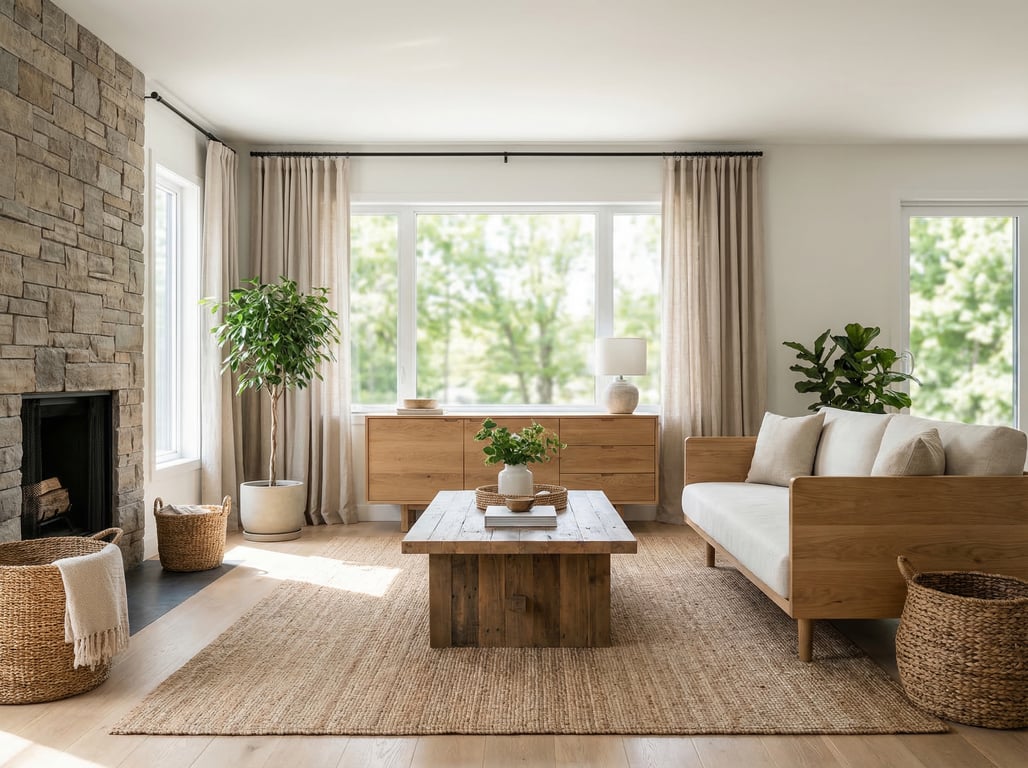
Not every natural detail helps a listing. The best ones are visible in photos, easy to maintain, and broad in buyer appeal.
Wood tones and warm neutrals
Wood is one of the strongest value signals in interior presentation. It can show up through floors, dining tables, stools, shelving, frames, or cabinetry details.
Best practices:
- Choose medium or light wood tones over orange-heavy finishes
- Pair wood with warm whites instead of stark cool grays
- Repeat the same wood family across the room for consistency
- Use warm neutrals to connect floors, walls, and textiles
This helps a space feel intentional. In listing photography, consistent wood and neutral tones reduce harsh contrast and make the room look more expensive.
Stone, limewash, and textured finishes
Stone-inspired surfaces and textured wall treatments are especially effective when a room feels plain or dated. They add age-resistant character without requiring ornate decor.
Useful options include:
- Honed stone or quartz with soft veining
- Limewash-style paint finishes
- Textured ceramic accessories
- Matte plaster or plaster-look walls
- Stone-look tile in baths and kitchens
These finishes create depth that reads well on camera. They can also make older builder-grade rooms feel more architectural.
Plants, daylight, and soft layered textiles
Greenery is most effective when it is controlled and scale-appropriate. One well-placed floor plant or a small grouping in the kitchen usually works better than filling every surface.
For inspiration on cleaner, listing-friendly greenery choices, see AI plant styling ideas for real estate listings.
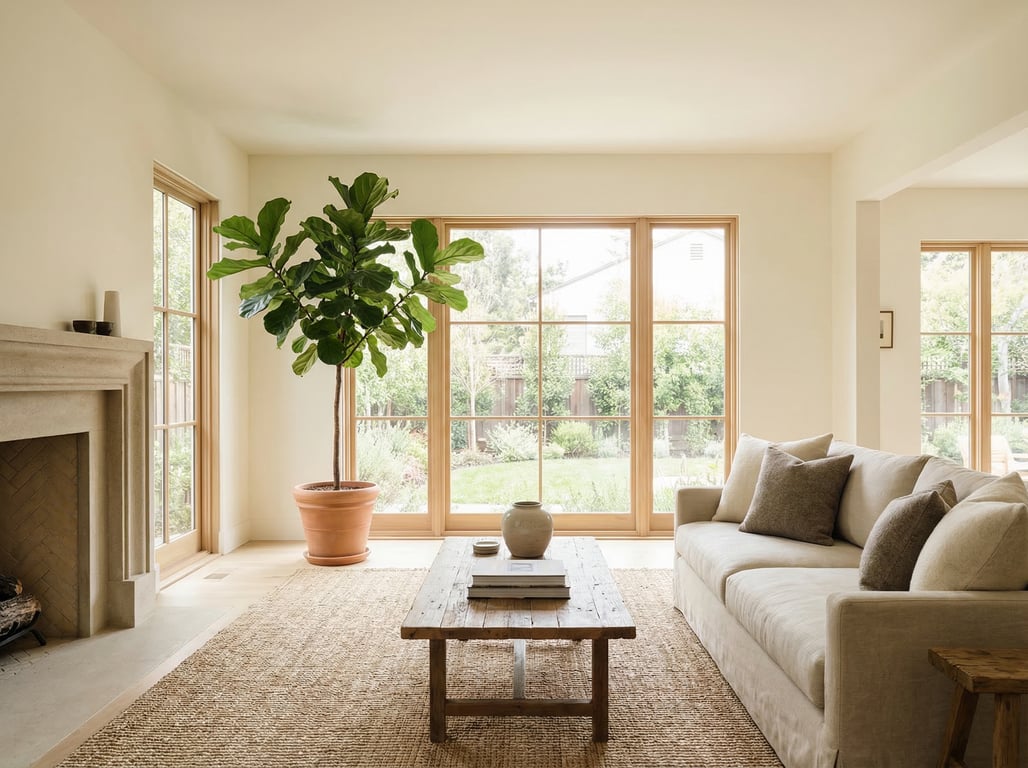
Textiles also matter. Use light-filtering curtains, textured throw pillows, wool or jute-inspired rugs, and simple bedding in natural fibers. Combined with daylight, these elements make rooms feel healthier and more livable.
Checklist for camera-friendly layering:
- Open window treatments to maximize daylight
- Use one or two plant moments per room
- Add texture through fabric, not excess decor
- Keep the palette soft and tonal
Room-by-room ideas agents and sellers can use
The strongest results usually come from prioritizing the rooms buyers study most closely in photos: living room, kitchen, bathroom, and entry.
Living room visual updates
A living room should feel open, soft, and easy to inhabit. Focus on larger visual anchors first:
- Replace heavy curtains with light linen panels
- Add a warm neutral rug large enough for the seating area
- Use wood or stone-look coffee and side tables
- Limit shelving accessories to a few sculptural objects
- Bring in one plant for height and freshness
If the room feels too cold, shift from gray styling to cream, taupe, sand, and muted olive accents. That small color adjustment can dramatically improve buyer response.
Kitchen details that feel renovated without a full remodel
Kitchens benefit from subtle natural cues more than staged clutter. You do not need a full renovation to get a cleaner, more valuable impression.
Try these updates:
- Swap cool hardware for brushed brass, black, or soft bronze depending on the home
- Add wood stools or cutting boards for warmth
- Use simple ceramic bowls rather than colorful countertop accessories
- Style open shelving minimally
- Consider painting walls in a warm white that softens cabinets and counters
Where a remodel is being considered, testing finish combinations visually before installation can prevent expensive mismatches.
Bathroom touches that signal spa-like quality
Bathrooms gain value when they feel light, calm, and clean. Natural elements interior design works well here because it supports a spa-like impression.
Good options include:
- White or warm stone-look towels
- Wood stools or bath trays
- Matte ceramic containers
- Eucalyptus or a single green branch
- Beige, greige, or sand-toned bath mats
Keep the styling spare. In bathrooms, too many objects quickly look like clutter instead of luxury.
Entryway cues that improve first impressions
The entryway sets the tone before buyers reach the main living areas. A narrow console in wood, a soft runner, a simple mirror, and one natural accent can instantly improve perceived care and cohesion.
If you want more focused ideas here, review these entryway decor ideas to impress buyers. The key is restraint: one strong welcoming vignette is more effective than multiple small accessories.
Before-and-after planning: when to use visualization before renovating
Natural elements interior design often works best when you preview it before buying materials. Visualization helps sellers and agents market more confidently while reducing guesswork.
Testing finishes before spending money
If you are deciding between oak versus walnut, limewash versus flat paint, or matte stone versus glossy quartz, renderings can clarify which option best fits the home.
This is especially useful when the property has fixed elements that are not changing, such as flooring or cabinetry. You can build a natural palette around what already exists instead of renovating blindly.
Showing multiple style directions for one room
Some homes can support more than one buyer-friendly direction. A room may work with soft natural transitional styling, cleaner biophilic interior styling, or a more editorial organic look.
Showing two or three visual options helps sellers choose a strategy based on target buyer and price point. It also helps agents explain why certain updates will photograph better than others.
This is where virtually staged photos for real estate can be useful, especially for vacant or outdated rooms that need a clearer story.
Using visuals to market outdated spaces more confidently
When a property is dated but structurally sound, visuals can bridge the gap between current condition and future potential. Buyers often struggle to imagine how older finishes could look after selective updates.
Visualization allows you to present nature-inspired interiors for home selling without committing to a full remodel first. It is also a practical decision point when comparing virtual staging vs home staging for timeline, budget, and listing strategy.
Common mistakes that make nature-inspired interiors look messy instead of premium
Natural styling can increase value perception, but only when it stays controlled and intentional.
Too many decor accents
A common mistake is overfilling rooms with baskets, branches, vases, beads, bowls, and layered tabletop styling. What feels earthy in a design feed can look distracting in a listing gallery.
Rule of thumb:
- Prioritize texture over quantity
- Let larger items do the work
- Leave negative space on surfaces
- Remove anything that interrupts clean sightlines
Dark photos that flatten texture
This style depends on subtle material variation. If photos are underlit, the wood, textiles, and stone finishes can all collapse into one muddy tone.
Before photography:
- Schedule the shoot for the brightest time of day
- Open shades and sheers
- Replace dim bulbs with warm, consistent lighting
- Avoid overly dark wall colors unless the home is luxury-focused and professionally lit
Mixing rustic and luxury signals poorly
Natural does not automatically mean rustic. A premium listing can use natural materials without looking farmhouse-heavy or overly casual.
Watch for mismatches such as:
- Raw distressed wood next to high-gloss glam finishes
- Too many rustic accessories in a modern condo
- Casual woven pieces in an ultra-formal luxury setting without balance
The goal is harmony. Choose natural materials that fit the architecture, neighborhood, and expected buyer.
How to choose the right version of this style for different property types
Natural elements interior design should be adjusted to the price point and use case of the property.
Starter homes
For starter homes, keep updates affordable and visually broad in appeal.
Best choices:
- Warm paint
- Simple wood accents
- Neutral textiles
- Fresh greenery
- Light decluttering and brighter photography
Here, the style should make the home feel cleaner and more current, not heavily designed. Organic interior design for listings works best when it feels attainable.
Luxury listings
Luxury buyers expect calm sophistication and material credibility. In higher-end homes, natural elements should feel refined rather than casual.
Focus on:
- Real or realistic stone surfaces
- Custom-looking millwork or cabinetry tones
- Large-scale art with muted palettes
- Architectural lighting
- Minimal but high-quality styling
Luxury nature-inspired interiors for home selling should emphasize serenity, scale, and finish quality.
Short-term rentals and flips
For short-term rentals and flips, the style needs to photograph well and hold up across both listing platforms and buyer walkthroughs.
Use:
- Durable wood-look finishes
- Soft but simple bedding and textiles
- A few memorable natural focal points
- Cohesive styling across all rooms
Avoid highly personal decor. The room should feel polished enough to stand out, but neutral enough for broad market appeal.
Key takeaways
- Keep the article style-first and buyer-perception-driven, not generic decor advice.
- Use examples connected to listing presentation, renovation planning, and visual merchandising.
- Differentiate from existing organic modern content by focusing on the broader natural elements framework and property-marketing application.
- Include soft CTA moments around testing finishes and previewing room directions visually.
FAQ
Is natural elements interior design the same as biophilic design?
Not exactly. Biophilic design often focuses on the relationship between people and nature through light, views, airflow, and organic materials. Natural elements interior design is broader and more practical for listings, where the goal is often visual warmth and buyer appeal.
Does this style help dated listings look more expensive?
Yes. Warm wood tones, natural textures, better lighting, and restrained styling can make older rooms feel more current and cared for. The key is using a cohesive palette and avoiding clutter.
Which rooms benefit most from this look?
Living rooms, kitchens, bathrooms, and entryways usually show the biggest payoff because they shape first impressions in photos and during tours.
What is natural elements interior design?
It is an interior styling approach that uses materials, colors, textures, and light inspired by nature to make spaces feel calmer, more welcoming, and more valuable.
How can natural elements make a home look more valuable?
They improve warmth, texture, and visual cohesion. That helps rooms appear updated, brighter, and more intentionally designed in listing photos.
What rooms should use this style before listing?
Start with the living room, kitchen, primary bathroom, and entryway. These spaces have the strongest effect on buyer perception.
Can you visualize natural interior updates before renovating?
Yes. Visualization can help test finishes, compare design directions, and market older spaces more confidently before committing to renovation work.