
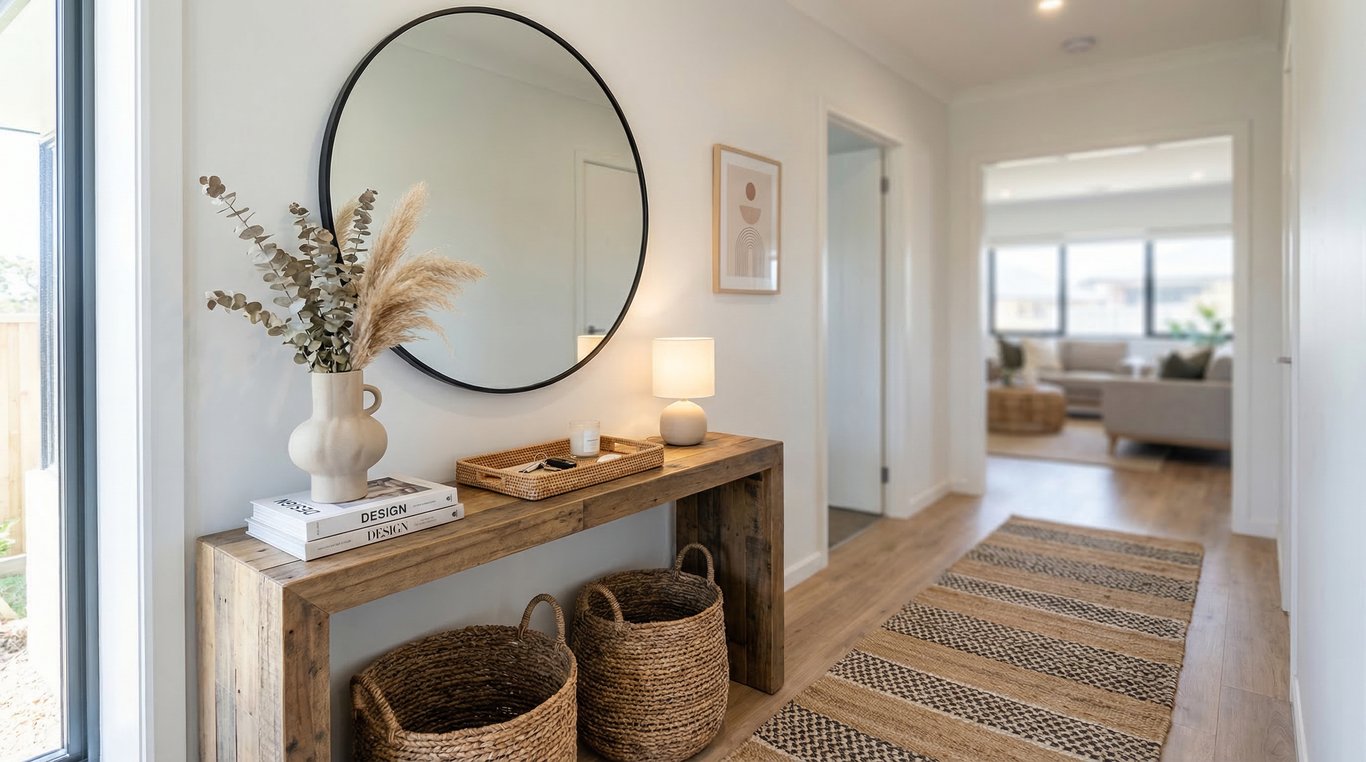

The entrance sets the tone for the entire showing. Before buyers evaluate the kitchen layout or the size of the bedrooms, they form an opinion based on the first few feet inside the door. That makes entryway decor ideas more than a styling exercise. They are a sales tool.
For homeowners, agents, and renovators, the goal is not to create a dramatic vignette that distracts. It is to make the home feel brighter, cleaner, larger, and easier to imagine living in. The best entryway decor ideas for home selling do exactly that in listing photos and in person.
This guide focuses on entrance ways ideas that improve first impressions fast, with budget-flexible options for small apartments, suburban foyers, and undefined entry zones. If you are already planning to stage your house, treat the entry as one of the highest-return places to start.
Why the entryway shapes buyer perception fast
What buyers notice in the first 5 seconds
Buyers usually register four things immediately:
- Light level
- Sense of space
- Cleanliness and organization
- Style consistency with the rest of the home
If the entrance feels dark, cramped, or overly personal, buyers may assume the rest of the home will feel the same. A bright, simple, well-scaled entry makes the property feel cared for and move-in ready.
This is why effective entryway decor ideas often focus on restraint. One mirror, one rug, one slim console, and one plant can outperform a crowded mix of baskets, hooks, artwork, trays, shoes, and seasonal decor.
Why small visual upgrades matter in listing photos and showings
The entry often appears in the first few listing photos or just outside the frame of connected spaces. Even when it is not photographed head-on, it influences how the home reads visually from room to room.
Small upgrades help because they improve both the camera view and the walk-through experience:
- A mirror bounces light and adds depth
- A runner defines the path into the home
- A narrow console creates purpose without bulk
- Clean wall styling makes the entrance memorable
- Interior decoration plants soften hard edges and add life
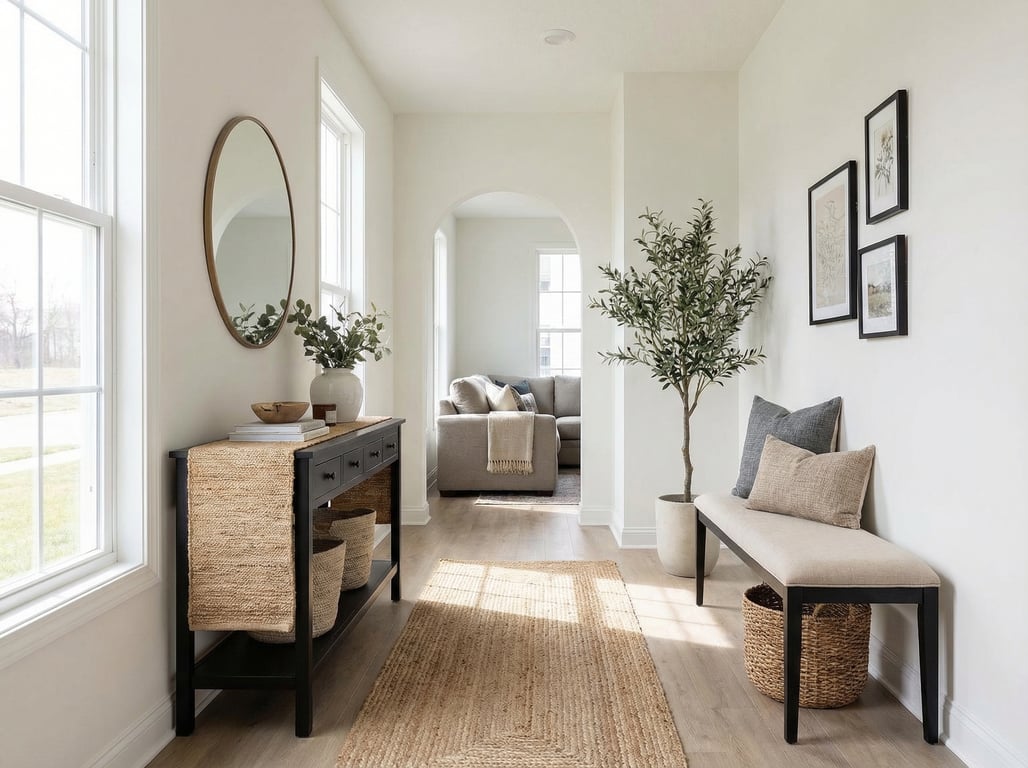
12 entryway decor ideas that photograph well
Light, mirror, and console combinations
This is one of the most reliable formulas for an entrance that looks polished in photos.
Try combinations like:
- Round mirror + slim wood console + ceramic lamp
- Tall mirror + floating shelf + small catchall tray
- Black-framed mirror + narrow painted table + stacked books
- Arched mirror + light oak console + woven basket below
Keep the console shallow, ideally around 10 to 14 inches deep for tight entries. Add just a few styling items:
- A lamp or vase
- One small tray
- One low stack of books
- One branch, stem, or plant
Rugs, runners, and scale for narrow entries
Runners help long or narrow spaces feel intentional. They also draw the eye forward, which can make the home feel larger.
Use these rules:
- Leave a visible border of flooring around the rug
- Choose low-pile materials for a cleaner look
- Avoid tiny mats that make the space feel chopped up
- Favor subtle patterns over loud prints for listing photos
For small entryway ideas that make a home feel bigger, pick a runner with light tones and gentle contrast. It will brighten the path without overpowering it.
Wall styling that adds character without clutter
Blank walls can feel unfinished, but over-decorated walls feel busy. The sweet spot is simple, scaled, and cohesive.
Good options include:
- One oversized art piece
- A pair of matching prints
- A mirror centered above a console
- A small ledge with one frame and one object
Avoid gallery walls unless they are extremely edited. Personal photos, quote signs, and novelty art tend to date the space and distract buyers.
Plant-led styling using natural elements
Buyers respond well to natural elements interior design because it makes interiors feel calm and current. In an entry, that means using texture and greenery in a minimal way.
Examples of natural elements that work well:
- Light wood benches or consoles
- Stone or ceramic vessels
- Woven baskets
- Linen shades or cushions
- Branches, olive stems, or eucalyptus
- Interior decoration plants in simple planters
Good plant choices for an entryway include snake plants, ZZ plants, pothos, or a single olive branch in a tall vase. If natural light is limited, high-quality faux greenery can still work in listing photos as long as it looks realistic.
Storage details that make the space feel organized
Storage is visual staging in the entry. Even if buyers never open a cabinet, they notice whether the area feels controlled or chaotic.
Add discreet organization with:
- A basket under a console
- A bench with closed storage
- Matching hooks with nothing hanging on them during photos
- A tray for keys and mail
- One closed shoe cabinet instead of visible footwear
The goal is not to show real life at full volume. The goal is to suggest that the home handles real life easily.
Entryway styling by home type
Small apartment entry
In a compact apartment, every inch matters. Prioritize vertical space and multi-use pieces.
Best choices:
- Wall mirror instead of floor mirror
- Floating shelf instead of full console
- Slim runner to lengthen the view
- One plant or branch, not several
- Hidden shoe storage
For entrance ways ideas in smaller homes, keep the palette light and consistent. Too many finishes can make the entry feel visually noisy.
Suburban family home foyer
A larger foyer can handle more scale, but it still should not feel stuffed. Use a stronger anchor piece, such as a larger rug or console, then keep the styling edited.
Best choices:
- Statement mirror or oversized art
- Larger table lamp for warmth
- Bench if the space supports it
- One substantial plant
- Neutral rug with subtle texture
If the foyer opens toward the main sitting area, align the look with adjoining rooms. For example, if you are leaning into organic modern living room ideas, continue that same mix of warm wood, soft textiles, and clean shapes at the entrance.
Open-plan entrance near living room
When the front door opens directly into the living area, the entry should feel distinct but connected.
Use visual separators like:
- A runner to mark the arrival zone
- A narrow console behind or beside the door swing
- A mirror to create a focal point
- A plant to soften the transition
Avoid using decor that fights the style of the living room. The entry should act like an introduction, not a separate theme.
Vacant property with no defined drop zone
Vacant homes often suffer from one problem at the entrance: buyers do not know how the area is supposed to function. A small staging moment can fix that quickly.
Create a simple drop zone with:
- Slim console or bench
- Mirror or art above it
- Rug or runner below
- One styled object and one natural element
This is especially useful when there is no clear foyer. Agents who need extra help developing these moments may benefit from working with an interior decorator for real estate agents to create cohesive styling plans across the listing.
Mistakes that make an entrance feel smaller or dated
Oversized furniture
A deep console table, heavy bench, or bulky cabinet can shrink the first impression immediately. In most entries, slim and elevated pieces work better than chunky ones.
Quick check: if buyers need to angle around furniture, it is too large.
Too many personal items
Shoes, family photos, pet gear, backpacks, and key piles all compete for attention. Buyers do not need proof that the space is lived in. They need room to imagine themselves there.
Remove:
- Daily mail stacks
- Personal photos
- Excess hooks
- Sports gear
- Seasonal clutter
- Visible charging cords
Dark corners and bad bulb choices
The wrong light can flatten an entry or make it feel dingy. Replace weak, yellowing, or mismatched bulbs before listing photos.
Aim for:
- Even brightness
- Clean fixtures
- Consistent bulb temperature throughout nearby spaces
- Warm but crisp light that flatters walls and flooring
A mirror near a lamp or window can also help amplify available light.
Decor that fights the home's style
A farmhouse sign in a sleek condo or ultra-modern sculpture in a traditional colonial can make the entrance feel disconnected. Buyers notice when the story changes room by room.
Keep the entry aligned with the home's broader design language. That does not mean identical furniture everywhere. It means repeating materials, tones, and shapes so the whole property feels intentional.
How to preview entry updates before spending on decor
Using before/after visualization to test styles
If you are deciding between a bench and a console, a round mirror versus an arch, or live plants versus sculptural branches, previewing the changes first can reduce guesswork.
This is where virtually staged photos can help. They allow agents and sellers to test entryway before-and-after ideas before buying accessories, moving furniture, or committing to a style direction.
Previewing is particularly useful when:
- The property is vacant
- The entry is unusually small or awkward
- You are targeting a specific buyer profile
- You want multiple style options for the same listing
When agents and homeowners should mock up options first
Mockups make sense when budget or timing is tight. Instead of buying decor that may not suit the listing, test a few concepts digitally or with quick temporary setups.
Consider previewing first if:
- You need to decide what actually improves photos
- The seller has too many decor items and needs editing guidance
- The entrance opens directly into another styled room
- You want to compare minimal, classic, and organic looks side by side
For commercial intent searches like how to decorate an entrance before listing photos, this step is often the difference between random decorating and strategic presentation.
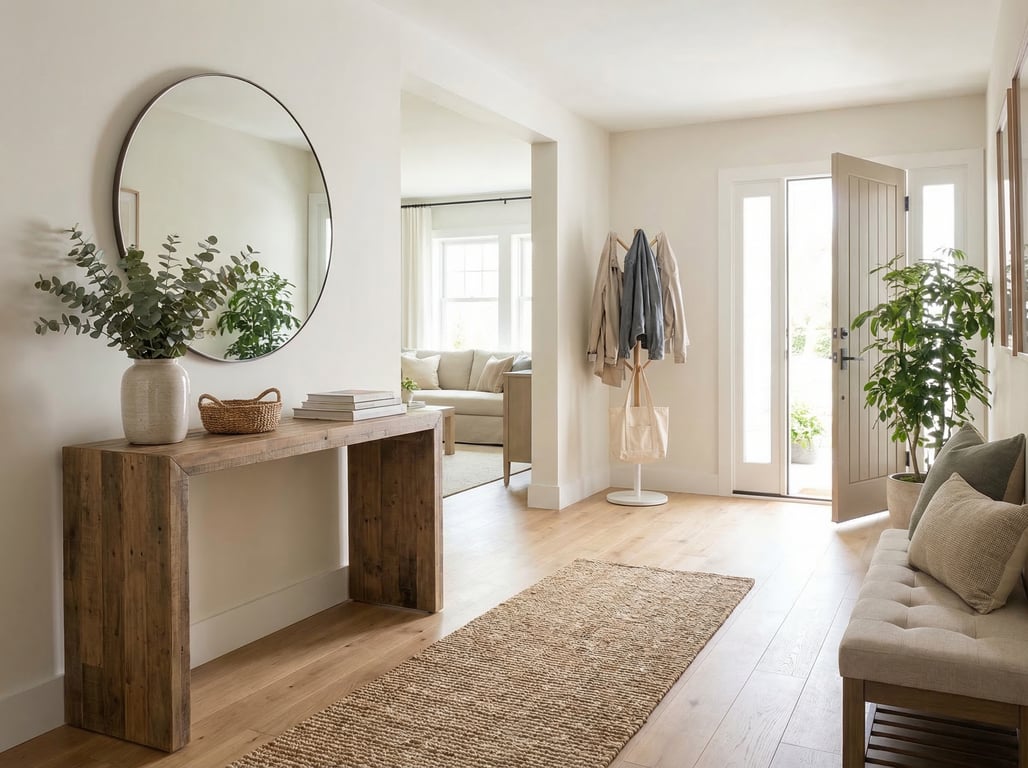
A simple entryway checklist before listing photos
What to remove
Before photos or showings, remove anything that creates friction or visual noise:
- Shoes and floor clutter
- Personal photos and name signs
- Bulky coat racks
- Excess baskets and bins
- Seasonal decor unless it is subtle and current
- Pet items and umbrellas if not neatly concealed
What to add
Use just enough decor to give the area shape and warmth:
- One mirror or art piece
- One slim console, bench, or shelf
- One rug or runner
- One tray, vase, or lamp
- One plant or branch for natural softness
What to brighten
Check all the details that affect how spacious the entry feels:
- Replace dim bulbs
- Clean glass and mirrors
- Touch up scuffed trim and baseboards
- Open nearby blinds if they add light
- Use lighter textiles if the area reads heavy
What to photograph
Capture the entrance in a way that supports the full listing story:
- Straight-on shot if the foyer has strong symmetry
- Angled shot if it helps show flow into the home
- Detail shot if the entry styling is part of the design appeal
- Transition shot showing the path from entry to living area
If you already plan to stage your house, add the entrance to your final photo-day checklist rather than treating it as an afterthought.
Key takeaways
- Position entry updates around listing appeal and first impressions, not generic decorating alone.
- Use light, scale, organization, and style continuity to improve both showings and listing photos.
- Focus on the entrance sequence specifically so buyers feel the home is welcoming from the first step inside.
- Natural materials and interior decoration plants can support a calm, current, biophilic look without clutter.
- Keep recommendations flexible so agents, homeowners, and renovators can improve the entry at different budget levels.
FAQ
What are the best entryway decor ideas for selling a house?
The best options are simple and photo-friendly: a mirror, slim console, runner, warm lighting, and one plant or vase. These make the entrance feel brighter, cleaner, and more intentional.
How do you decorate a small entrance without cluttering it?
Use fewer, better-scaled pieces. A wall mirror, floating shelf, slim runner, and one decorative accent are usually enough. Hidden storage also helps keep the area clear.
Do plants work in entryway decor for listing photos?
Yes. Plants can soften hard surfaces and make the entrance feel fresh. Stick to one or two realistic options, and choose shapes that do not block the path or overwhelm the frame.
What colors make an entryway feel brighter and bigger?
Light neutrals, soft warm whites, pale greige, and muted natural tones usually work best. They reflect light well and help the space feel open while still looking warm and inviting.