
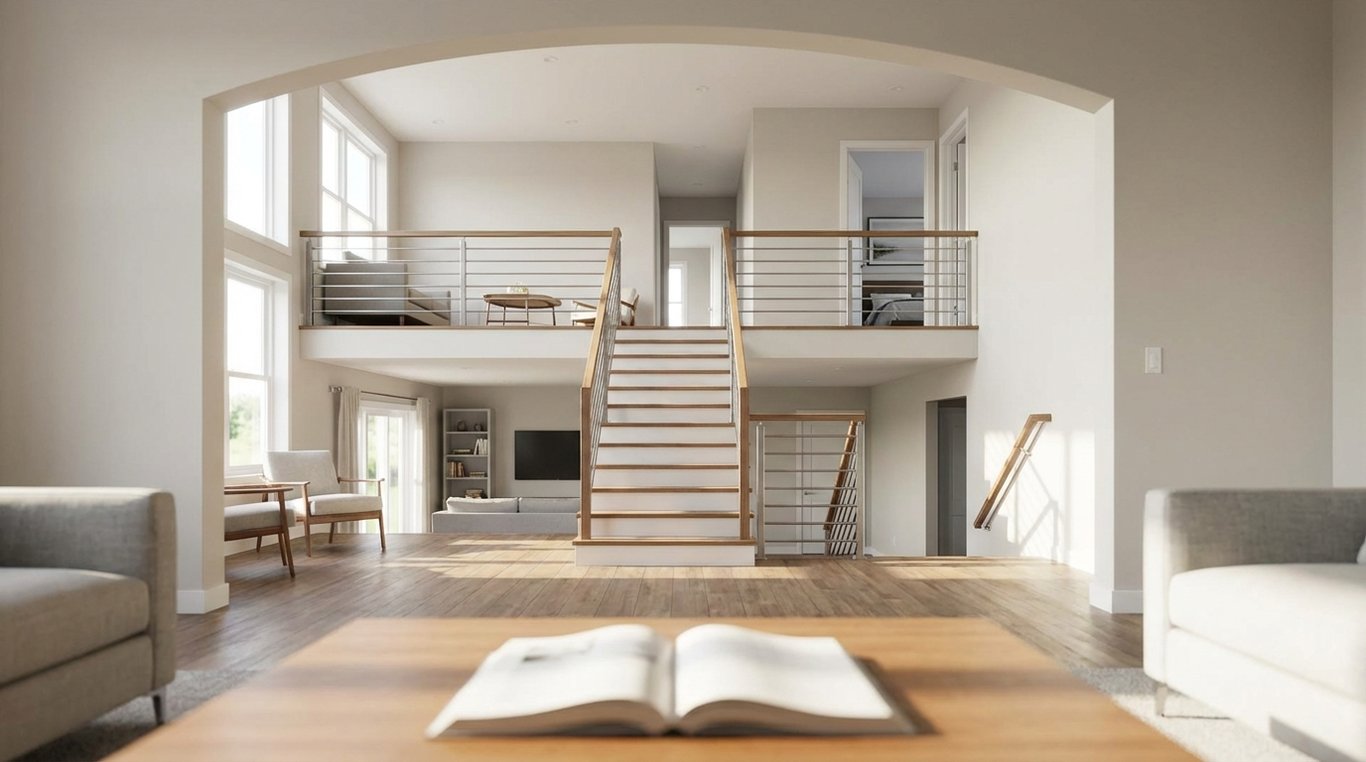

When buyers search terms like blog/what is a tri level home, they are usually trying to solve a very practical problem: they cannot quite picture how the house is arranged. For real-estate professionals, that confusion matters more than it may seem. A tri-level home can be a strong listing, but only when buyers understand the layout before they arrive. If they expect a traditional two-story or a standard ranch with a basement, the showing starts with disorientation instead of interest. If they understand the floor plan in advance, they are much more likely to appreciate the separation of space, the flexible lower level, and the everyday functionality that makes this style appealing.
A tri-level home typically has three living levels connected by short flights of stairs. In many cases, the main entry opens near the middle level, with bedrooms above and a lower family room, utility area, laundry zone, or garage-adjacent space below. That simple definition is helpful, but for agents, brokers, marketers, and stagers, the real challenge is not naming the house. It is translating the layout into buyer-friendly language that sets accurate expectations and highlights the lifestyle advantages the home actually offers.
Blog/What Is a Tri Level Home in real-estate terms?
In real-estate practice, a tri-level home is best understood as a house organized across three staggered living zones rather than two full stories stacked directly over each other. The defining feature is circulation. Instead of walking into one long main level and then using a full staircase to reach all upstairs rooms, buyers often enter onto a central landing or middle level and then move a short distance up or down to reach the rest of the home.
That distinction is important because the term often creates confusion. Buyers hear “three levels” and may imagine a townhouse, a narrow vertical home, or a two-story house with a finished basement. A tri-level usually feels different from all three. The floor plan is segmented, the stair runs are shorter, and the living areas are divided into clear activity zones. Some buyers immediately recognize that as a benefit. Others need help seeing why the arrangement works.
For professionals, the most effective explanation is practical, not technical. Buyers do not need a lecture on residential taxonomy. They need to know where they enter, where the primary living happens, where the bedrooms are, and what role the lower level plays. Once those points are clear, the home becomes easier to market, easier to compare with competing inventory, and easier to show without confusion.
Regional language can add another layer of uncertainty. In some markets, agents and buyers use “tri-level” and “split-level” almost interchangeably. In others, “tri-level” suggests a more specific three-zone arrangement. Because local usage varies, professionals should focus less on defending the label and more on describing the layout precisely. Clear room sequencing will do more to build buyer confidence than perfect terminology ever will.
How the layout usually works in everyday living
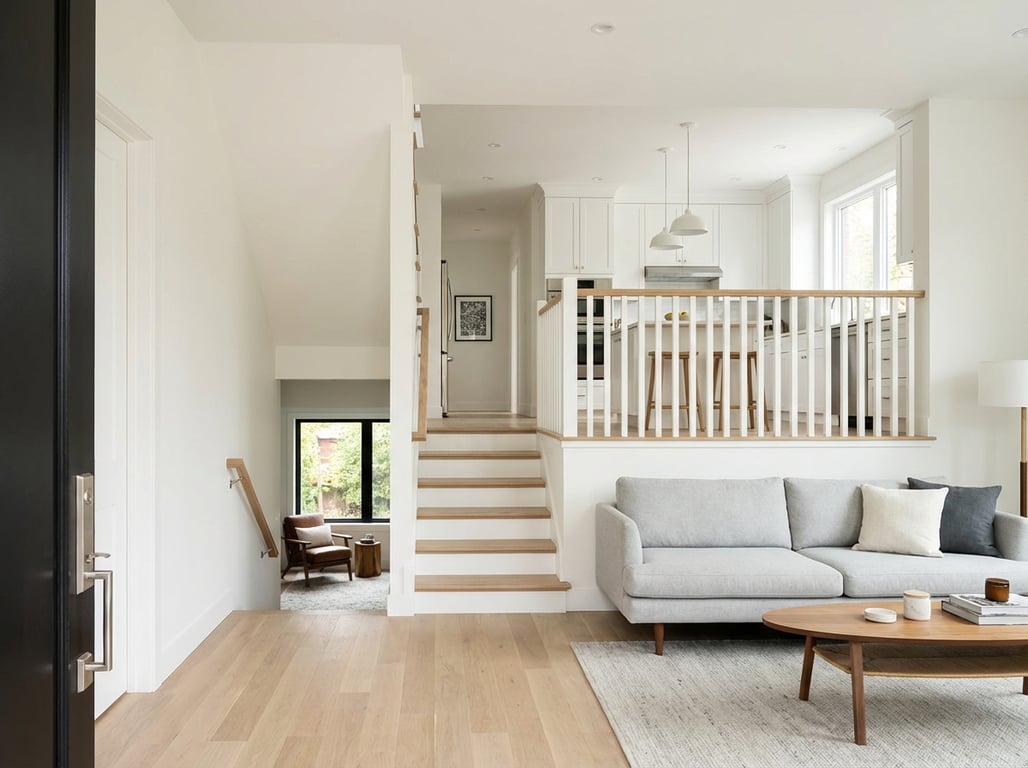
Most tri-level homes are structured around a middle level that serves as the daily hub. This level often includes the front entry, kitchen, dining area, and sometimes the formal or primary living room. From a sales perspective, this level carries unusual importance because it shapes the buyer’s first impression of whether the home feels coherent, bright, and easy to navigate.
The upper level is typically the private zone. Bedrooms and full bathrooms are often grouped there, creating separation from entry traffic, cooking noise, and lower-level activity. Many households find this arrangement highly practical. Parents may like having sleeping spaces grouped together, remote workers may prefer a more defined divide between rest and activity, and buyers coming from open-concept homes may appreciate that the bedroom level feels insulated without being disconnected.
The lower level is where buyer reactions often become most market-sensitive. In some tri-level homes, this space is a major strength: a bright family room, office, playroom, guest zone, workout area, or mudroom transition with direct access to the yard or garage. In others, the lower level feels dim, underdefined, or more basement-adjacent than truly integrated into the living experience. The same square footage can therefore produce very different buyer responses depending on light, finish quality, ceiling height, and use clarity.
That is why real-estate professionals need to assess the lower level honestly. If it has good windows, comfortable ceiling height, and a clear function, it can become a major selling point. If it feels darker or less flexible, the listing should still describe it accurately rather than inflate expectations. Buyers are usually willing to accept a tradeoff when it is explained well. They are far less forgiving when the online presentation overpromises what the showing does not deliver.
Why tri-level and split-level are so often confused
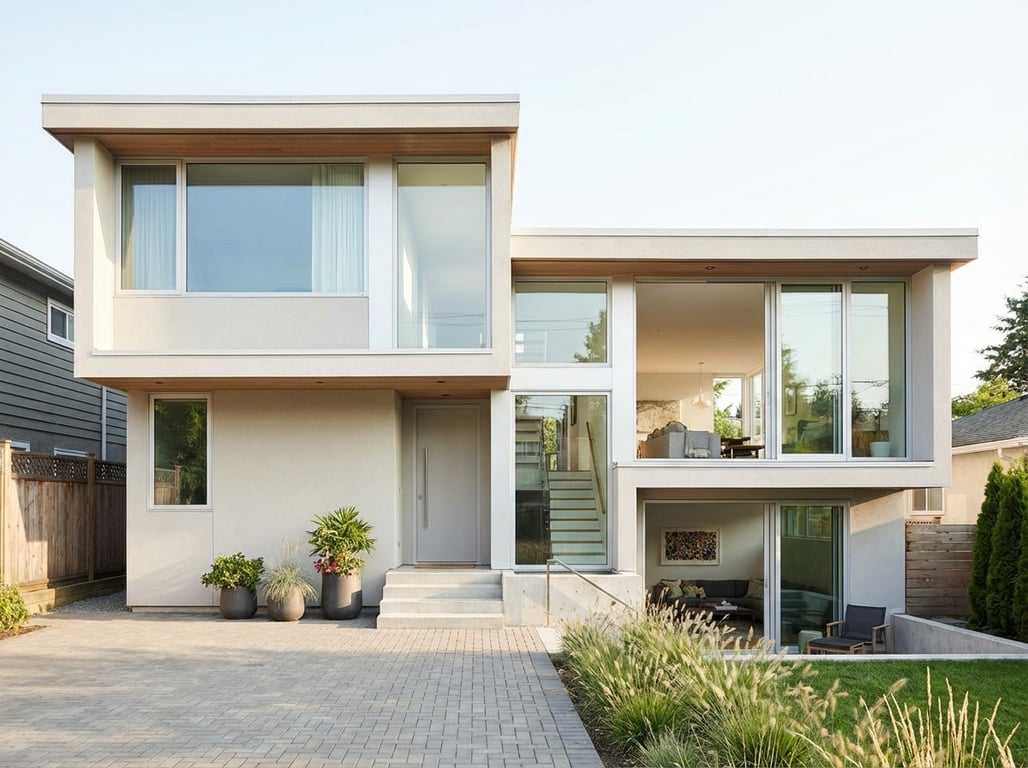
One of the most persistent challenges with this home type is that “tri-level” and “split-level” are not always used consistently. In many markets, a tri-level is treated as a category within split-level homes. In other areas, both terms are used casually to describe any home with staggered floors and short stair transitions. This creates friction not only for buyers, but also for sellers, MLS entries, appraisers, and even agents working across different neighborhoods.
The best solution is descriptive clarity. Instead of relying on one label alone, explain the home’s actual structure. If the house has three distinct levels, say so. If the entry sits between an upper bedroom level and a lower family-room level, say that too. Buyers respond better to a visualized explanation than to terminology that may mean different things depending on where they previously lived.
This matters because people do not experience a house as a definition. They experience it as movement. They notice whether the kitchen feels connected to dining, whether the lower level is bright enough to spend time in, whether the bedrooms feel private, and whether the stairs seem manageable for daily routines. A tri-level home can be very functional, but if that function is not explained early, buyers may interpret the segmentation as awkward instead of purposeful.
For online marketing, this confusion also shapes search behavior. Some buyers specifically seek staggered-floor homes because they want defined zones for children, work, hobbies, or multigenerational living. Others assume they dislike the format because they associate it with dated interiors or too many stairs. Your role is not just to identify the architecture. It is to connect the layout to a lifestyle and help the right audience recognize its strengths.
What tri-level homes tend to do well
The strongest advantage of a tri-level home is separation of function. Instead of concentrating every activity into one large open area, the layout naturally creates zones. The main level often supports cooking, dining, and social flow. The upper level offers privacy and quiet. The lower level absorbs secondary living, recreation, work, or transition space. That kind of organization can make the home feel more useful than its footprint suggests.
This is especially valuable for households with competing routines. A lower-level family room can give children or teens space without overwhelming the main level. A work-from-home buyer may see the lower zone as an office that is physically distinct from both the kitchen and bedroom areas. A household that hosts guests may appreciate the ability to entertain on the main level while preserving privacy upstairs. In each case, the layout supports daily life by reducing overlap between activities.
Tri-level homes can also offer efficient land use. Because the square footage is distributed vertically in staggered sections rather than spread entirely across one level, the property may preserve more yard area than a comparably sized ranch. In neighborhoods where outdoor space is highly valued, that balance between interior function and exterior usability can be a real asset.
For sellers, this often translates into “bonus utility.” A lower-level family room, office, or flex area may give buyers the feeling of extra capacity without the price jump of a much larger or newer home. In affordability-sensitive markets, that matters. When properly presented, a tri-level can compete not by mimicking open-concept new construction, but by offering practical separation and adaptability at a more accessible price point.
Where these homes create objections or valuation challenges
The same characteristics that make tri-level homes useful can also create hesitation. The most obvious issue is stairs. Even though the stair runs are usually shorter than those in a conventional two-story house, daily life still involves level changes. Buyers focused on aging in place, mobility limitations, or one-level convenience may quickly disqualify the property. That does not make the home less valuable overall, but it does narrow the ideal audience.
Another challenge is that not all finished square footage is perceived equally. An upper bedroom level and a lower family room may both be counted in total living area, but they do not always carry the same emotional value in the market. Lower-level appeal depends heavily on natural light, egress, moisture history, ceiling height, and finish quality. A bright lower level with outdoor access may feel like true extension of the home. A dim lower level with dated finishes may feel more like compromise space.
This is where comp selection becomes especially important. Sellers may compare a tri-level to larger, more open two-story homes because the bedroom count and square footage look similar on paper. Buyers may compare the same property to ranch homes because they are thinking about convenience and sightlines. Both comparisons can distort value if the layout logic is ignored. The best comparable sales are usually homes with similar circulation patterns and similar lower-level usability, even if the finishes are not identical.
Expectation mismatch is another common issue. If listing photos emphasize only upgraded finishes and avoid orientation shots, buyers may form the wrong mental image. Then they arrive and spend the first few minutes trying to understand the stairs and room sequence. That reset can weaken emotional momentum. The layout itself may be perfectly functional, but surprise rarely helps a showing.
Condition inconsistencies tend to feel more obvious in tri-level homes too. Different flooring on every level, abrupt paint changes, clashing light temperatures, or outdated stair rail details can make the house feel fragmented. In a simpler floor plan, buyers may interpret those as ordinary cosmetic updates waiting to happen. In a tri-level, those same inconsistencies can exaggerate the sense that the house lacks cohesion.
How to market a tri-level home without confusing buyers
The most effective marketing for a tri-level home replaces vague labeling with clear explanation. Calling the property “a charming tri-level” does almost nothing on its own. A stronger approach is to explain that the middle level contains the kitchen, dining, and primary living areas, the upper level holds the bedrooms and baths, and the lower level offers a family room, office, laundry area, or garage-adjacent flex space. That short description immediately helps buyers build a mental map.
Photo sequencing matters just as much as wording. A tri-level listing should not rely only on detail shots of counters, fixtures, and finishes. Buyers need orientation. Entry views, stair transitions, wider room angles, and photos that show how levels connect are essential. If the layout is the buyer’s main question, the media package should answer that question before the showing ever happens.
A floor plan is especially valuable with this home type. Many buyers can adapt to an unusual layout when they understand it in advance, but resist it when they feel surprised. A clear floor plan reduces wasted showings, improves lead quality, and helps remote decision-makers understand the home faster. It also lowers the odds that the property attracts shoppers who were expecting a completely different floor-plan style. For a deeper look at layout language and positioning, see What Is a Tri-Level Home? Layout, Pros/Cons, and Remodeling.
Showing strategy should mirror the listing strategy. At the front door, briefly explain the home’s organization before launching into feature highlights. A simple orientation such as, “The main living spaces are on this middle level, the bedrooms are upstairs, and the lower level works as a second living zone,” can immediately reduce uncertainty. Buyers then spend the showing evaluating fit rather than trying to decode the floor plan.
Presentation also matters. If the lower level is darker, improve lighting and define the room with a clear purpose. If the main level feels visually interrupted by stairs, create continuity with paint, flooring, and restrained décor. If the home needs help expressing a stronger lifestyle story, thoughtful staging can make the segmented layout feel intentional instead of dated. The goal is not to disguise the home’s structure, but to make that structure easier to understand and appreciate.
How agents should talk about fit, not just features
When buyers ask whether a tri-level is a “good layout,” the best answer is not a simple yes or no. It is more useful to say that the layout is good for certain living patterns and less ideal for others. That framing turns the conversation away from abstract design preference and toward practical compatibility.
For example, a buyer working remotely may value the lower level as a true separation zone for an office or studio. A family with children may like having a second living area that keeps toys, media, or noise away from the main entertaining spaces. A buyer who values privacy may like that the bedrooms are not directly adjacent to the front entry or kitchen activity. These are real lifestyle benefits, and they should be described in those terms.
On the other hand, buyers seeking single-level living, barrier-free movement, or broad uninterrupted sightlines may not be the best match. A strong agent does not try to argue away those concerns. Instead, the agent helps the buyer recognize whether the layout supports their routines. That honesty builds trust and often leads to stronger client relationships, even when the answer is that this particular home is not the right fit.
This approach also improves listing performance. Homes are easier to sell when the marketing attracts buyers who will genuinely appreciate the floor plan. Tri-level homes tend to perform best when they are positioned around functional zoning, flexibility, and efficient use of space rather than forced into the language of open-concept trends they were never designed to imitate.
Practical remodeling and presentation opportunities
Many tri-level homes respond extremely well to focused updates because their biggest weaknesses are often not structural but perceptual. Dark railings, chopped-up visual transitions, older flooring changes, heavy wall colors, and inconsistent finishes can make the layout feel more disjointed than it actually is. Unifying those elements often delivers a major improvement in how the home is experienced.
Lighting is usually the first place to start. Lower levels benefit from brighter layered lighting, cleaner fixture styles, and thoughtful bulb temperature consistency. Flooring continuity can also reduce the sense of interruption from one level to another. Even when materials differ for practical reasons, keeping tones harmonious helps the house read as one integrated environment instead of three unrelated spaces.
Staging should emphasize purpose. An undefined lower room is one of the fastest ways to lose buyer confidence. If the space can function as a family room, office, guest lounge, or fitness zone, show it clearly. Buyers tend to respond better when the lower level answers a need instead of presenting another puzzle. Visual calm matters too; tri-level homes often benefit from lighter palettes and fewer competing focal points because the stairs already introduce movement into the space.
These presentation choices are increasingly important in online-first marketing, where buyers make quick judgments from photos before they ever set foot inside. Small design decisions that improve warmth, brightness, and visual continuity can help the entire house feel newer and more valuable.
FAQ
Is a tri-level home the same as a split-level home?
Not exactly. In many markets, a tri-level is considered a type of split-level because both use staggered floors and short stair runs. In everyday real-estate use, though, “tri-level” usually points more specifically to a house with three distinct living levels. Because terminology varies by region, the safest approach is to describe the actual room arrangement and how the levels connect.
How many levels does a tri-level home usually have?
A tri-level home usually has three main living levels. In many common versions, the middle level contains the entry, kitchen, and living areas, the upper level contains bedrooms and bathrooms, and the lower level contains a family room, laundry, utility area, or flex space near the garage. Some homes may also have an additional basement or sub-basement, but the defining concept is still the three staggered primary levels.
Are tri-level homes harder to sell?
Not inherently. They are more likely to be misunderstood than difficult to sell. Problems typically come from vague listing language, poor photo sequencing, or buyer surprise during the showing. When the floor plan is explained clearly, priced appropriately, and presented with strong orientation, tri-level homes often appeal to buyers who want privacy, flexible living zones, and more usable separation than a standard open layout provides.
What should agents emphasize in a tri-level listing?
Agents should emphasize the room sequence, the function of the lower level, and how daily life works across the three zones. Buyers want to know where they enter, how many stairs they will use, where the bedrooms are located, and whether the lower level feels bright and genuinely livable. Clear explanation usually outperforms generic adjectives.