
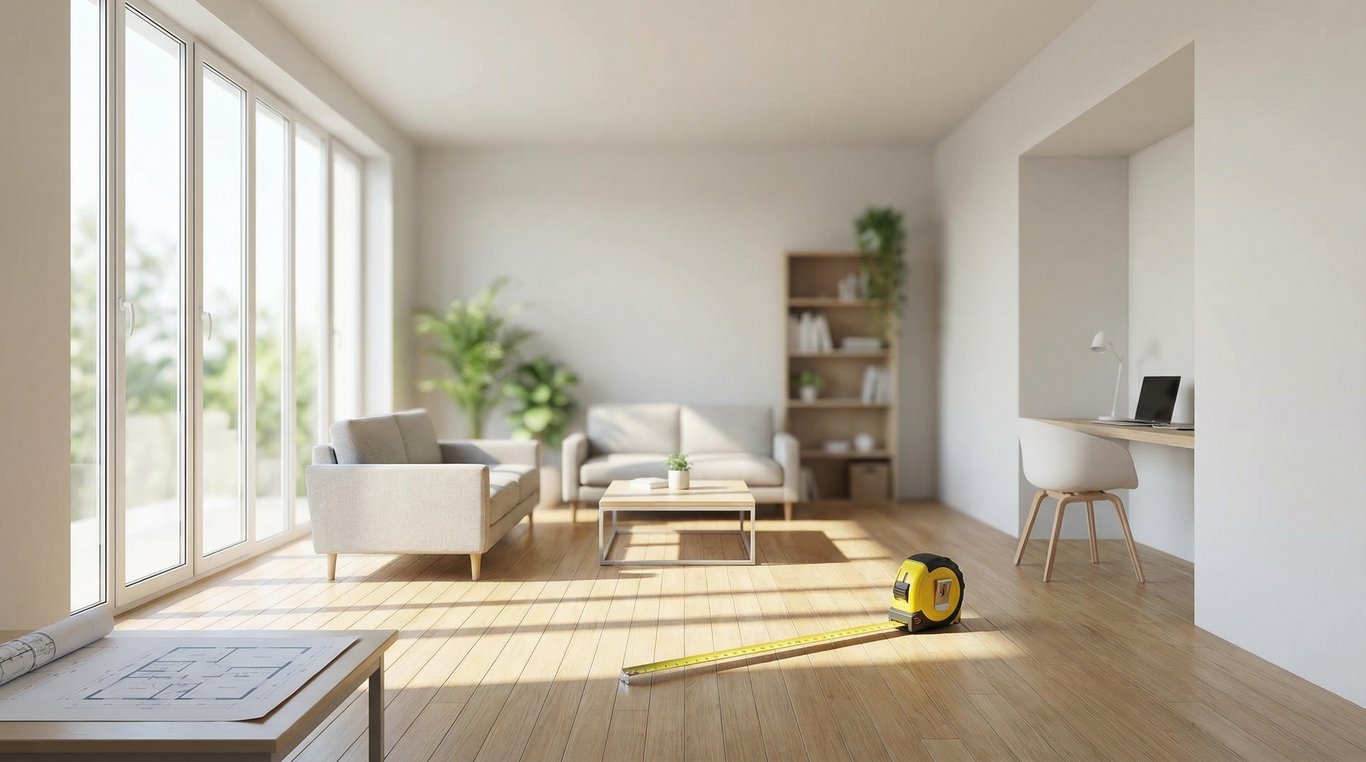

A 12x12 room is 144 square feet. That is the direct answer, and the math is simple:
12 feet × 12 feet = 144 square feet
But in real estate, design, and everyday use, that number is only the beginning. When people ask, “12x12 room is how many square feet,” they are usually not just checking arithmetic. They are trying to decide whether the room is large enough for a bedroom, whether a queen bed will fit, whether a desk can share the space, or whether the room will feel cramped once real furniture is inside it.
That is why this topic deserves more than a one-line answer. A 12-by-12 room is one of the most common room sizes in houses, apartments, condos, and rental properties. It often lands in the “standard and usable” category: large enough to be flexible, but not so large that layout choices do not matter. For buyers, renters, homeowners, landlords, stagers, and agents, understanding how 144 square feet functions in practice is far more useful than simply memorizing the number.
This guide explains the exact square footage, how to convert 12x12 into square meters, what changes when measurements include inches, and what actually fits in a room of this size. Just as important, it looks at why two rooms with the same stated dimensions can feel completely different once doors, closets, windows, and circulation come into play.
The exact square footage of a 12x12 room
Square footage is calculated by multiplying the room’s length by its width:
Square feet = length × width
For a room that measures 12 feet long and 12 feet wide:
12 × 12 = 144
So a 12x12 room contains exactly 144 square feet of floor area.
That answer assumes the room is measured wall to wall and is a true square. In many listings, however, room dimensions are rounded for simplicity. A room described as 12x12 may be slightly under or slightly over those dimensions in reality. That difference may not matter much for a casual conversation, but it can matter when you are choosing furniture, planning renovation work, or evaluating how a room compares with another property.
For real-estate professionals, this is where context matters. A “12x12 bedroom” sounds straightforward in a listing, but the actual experience of the room depends on more than the stated dimensions. Buyers react to how the room functions, not just to the math.
Why 144 square feet does not always feel the same
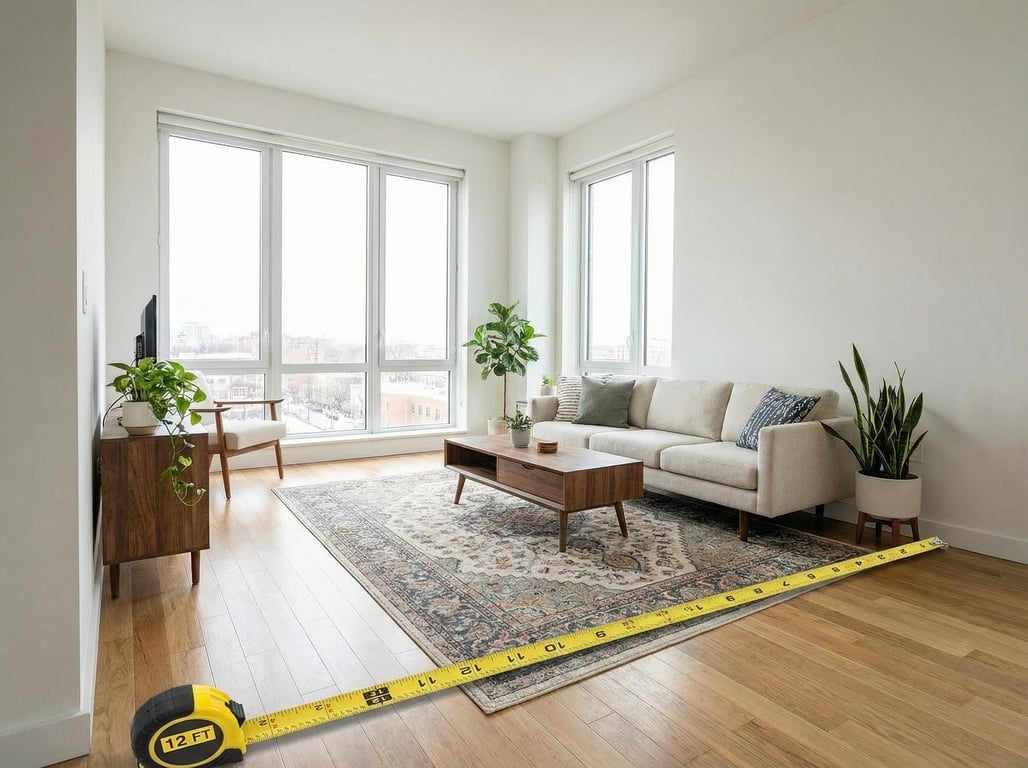
One of the biggest misconceptions about room size is that square footage alone determines usability. It does not. Two rooms can each measure 144 square feet and still feel dramatically different.
A clean square room with one door, a centered window, and uninterrupted wall space usually feels balanced and easy to furnish. Place a bed on one wall, a dresser on another, and the room often feels proportionate. But a second room with the same 12x12 footprint might include a closet that cuts into one corner, a bathroom door that interrupts bed placement, and a window wall that limits storage. Technically, it is still 144 square feet. Practically, it may feel tighter and less flexible.
This is especially important when evaluating bedrooms. A room does not feel spacious because of area alone. It feels spacious when there is comfortable circulation. If you can move naturally from the door to the bed, from the bed to the closet, and from the closet back out without weaving around furniture, the room reads as functional. If every route is squeezed, it will feel smaller than the dimensions suggest.
That is why a 12x12 room can be “good size” in one home and merely “adequate” in another.
If your measurements include inches
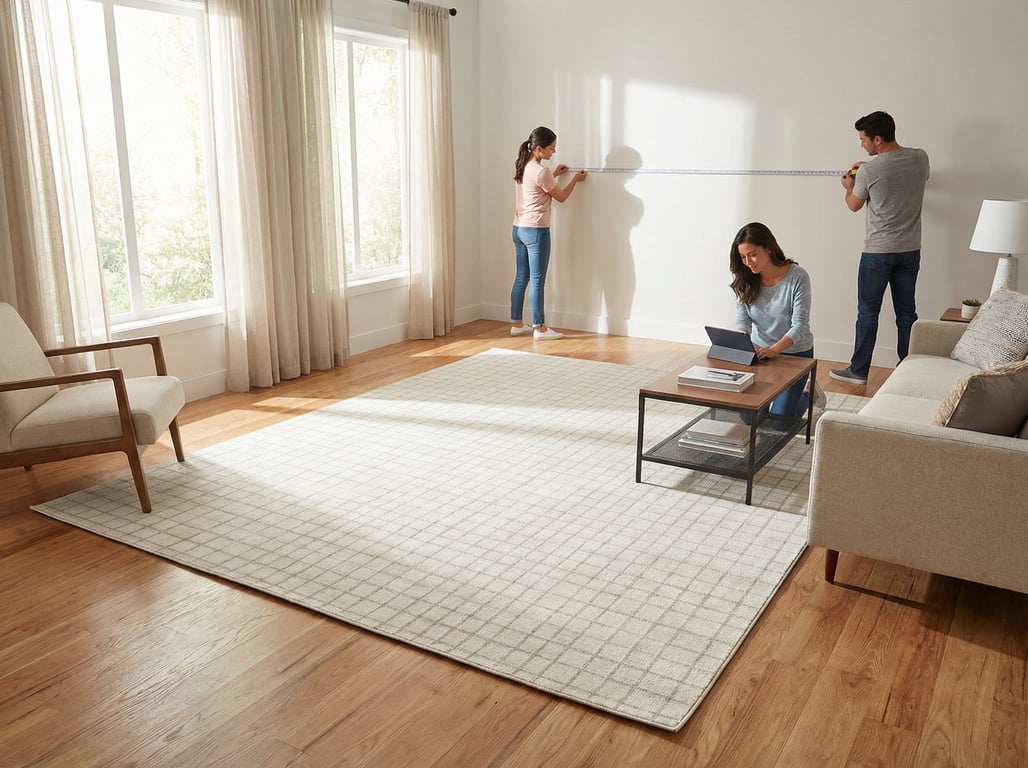
Not every room is measured in round numbers. You might have dimensions like 12'6" by 12', or 11'10" by 12'2". In those cases, convert inches into decimal feet before multiplying.
For example:
- 12'6" = 12.5 feet
- 12'0" = 12 feet
Then:
12.5 × 12 = 150 square feet
So a room that is 12 feet 6 inches by 12 feet is 150 square feet, not 144.
This matters more than many people expect. An extra 6 to 12 square feet can be the difference between comfortably fitting a dresser or having to downsize furniture. In compact rooms, small dimensional changes have an outsized effect on layout.
If you are measuring for a listing, a remodel, or furniture delivery, it is worth being precise. Rounded dimensions are fine for general understanding, but exact measurements are better for decisions.
What if the room is not a perfect square?
Many rooms described casually as “12x12” are not perfect squares. They may have alcoves, angled walls, bay windows, recessed closets, or short bump-outs. In those cases, measure each section separately and add the results.
For example, if the main portion of the room is 12 feet by 10 feet and there is an additional 2-foot by 4-foot nook:
- Main area: 12 × 10 = 120 square feet
- Nook: 2 × 4 = 8 square feet
- Total: 128 square feet
That approach gives a much more realistic number than relying on a shorthand label. It also helps explain why furniture planning can be frustrating when a room is “supposed to be” 12x12 but behaves like something smaller. Usable floor area is what matters most.
12x12 room in square meters
A 12x12 room is about 13.4 square meters.
Here is the conversion:
- 1 square foot = 0.092903 square meters
- 144 × 0.092903 = 13.38 square meters
Rounded, that becomes 13.4 sq m.
This is useful when comparing room sizes internationally or reviewing furniture dimensions listed in metric units. If you are shopping for imported furniture or reading plans that use meters, knowing the metric equivalent can help you avoid scale mistakes.
How 12x12 compares with other common room sizes
A 12x12 room often feels larger than people expect because it sits above the tighter 10x10 and 10x12 range. Those smaller rooms can still work well, but they usually require more compromise.
| Room size | Area (sq ft) | Difference from 12x12 |
|---|---|---|
| 10×10 | 100 | 44 sq ft smaller |
| 10×12 | 120 | 24 sq ft smaller |
| 11×12 | 132 | 12 sq ft smaller |
| 12×12 | 144 | — |
| 12×13 | 156 | 12 sq ft larger |
| 12×14 | 168 | 24 sq ft larger |
| 14×14 | 196 | 52 sq ft larger |
What these numbers show is that even modest changes in room dimensions matter. The jump from 10x10 to 12x12 adds 44 square feet, which is substantial in a bedroom. That is often the difference between “just enough” and “comfortably usable.” On the other hand, moving from 12x12 to 12x14 adds only 24 square feet, yet the room can feel much more generous because the extra length improves circulation around larger furniture.
This is one reason 12x12 is so often treated as a benchmark size. It is not oversized, but it usually clears the threshold where a room can serve multiple ordinary residential purposes without feeling inherently compromised.
What 144 square feet feels like in everyday use
In practice, a 12x12 room usually feels like a standard secondary bedroom or a comfortable dedicated office. It is large enough to support one main function very well and, in some cases, a secondary function if the furnishings are carefully chosen.
The common mistake is assuming 144 square feet can hold every item on a wish list. People often imagine fitting a queen bed, two full-size nightstands, a large dresser, a desk, an accent chair, and extra storage because the room does not sound small. Physically, some of those pieces may fit. Functionally, the room can become crowded fast.
That distinction matters in both design and real estate. A room is not successful because furniture can be forced into it. It is successful when there is still enough space to move, open drawers, make the bed, access windows, and keep the room visually calm.
In that sense, 144 square feet is best understood as a versatile but not unlimited amount of space.
Furniture dimensions and the importance of clearance
To understand what a 12x12 room can handle, it helps to look at typical furniture sizes.
Common mattress sizes include:
- Twin: about 38" × 75"
- Full: about 54" × 75"
- Queen: about 60" × 80"
- King: about 76" × 80"
Other common pieces include:
- Nightstand: 18" to 24" wide
- Dresser: 18" to 20" deep
- Desk: 24" to 30" deep
- Bookshelf: 10" to 14" deep
- Accent chair: 28" to 36" wide
The limiting factor is usually not the width of the furniture itself. It is the clearance around it. Comfortable rooms typically preserve around 30 to 36 inches of walking space in main circulation areas. That includes space beside the bed, in front of drawers, and behind a desk chair.
When clearance is reduced too much, the room stops feeling comfortable. A 12x12 room can absorb a surprising amount of furniture, but it starts to feel much smaller when every path is pinched.
Is a 12x12 room big enough for a bedroom?
Yes, in most cases a 12x12 room is absolutely large enough for a bedroom. It is a common and practical size for a child’s room, guest room, teenager’s room, or standard secondary bedroom. It can also work as a primary bedroom, depending on how much furniture is expected.
A queen bed usually fits well in a 12x12 room, especially if the bed is placed on the most uninterrupted wall and paired with modest nightstands. This setup often leaves room for one dresser and reasonable circulation. If the room must also include a desk or several large storage pieces, the space becomes tighter and requires more disciplined planning.
A full bed makes the room feel more open and flexible. For many households, especially in smaller homes or multipurpose rooms, that tradeoff makes sense.
A king bed is where things become less practical. While it may fit physically in some 12x12 rooms, it often consumes too much width once nightstands and walking space are added. The result can feel crowded and unbalanced.
How a 12x12 room works as a guest room or nursery
As a guest room, 12x12 is often a very comfortable size. It is large enough to feel welcoming without encouraging overfurnishing. A full or queen bed can work, depending on the intended look and how much open floor area you want to preserve. For staging, a slightly smaller bed often photographs better because it makes the room appear more spacious.
As a nursery, a 12x12 room is usually more than adequate. A crib, changing table, glider, and dresser can generally fit without difficulty. In fact, the challenge in a nursery of this size is usually not space, but keeping the room from becoming too packed with storage bins, extra seating, and decorative pieces.
In both cases, simple layouts usually perform best. The more visible floor area remains, the more generous the room feels.
Is a 12x12 room good for a home office?
A 12x12 room is a strong size for a home office. In many cases, it feels more than sufficient. Because office furniture tends to be shallower than bedroom furniture, the room often has greater flexibility. A desk, task chair, filing cabinet, bookshelf, and even a reading chair can usually fit comfortably.
This size also adapts well to hybrid use. A 12x12 office can include a sleeper sofa, daybed, or small guest setup more easily than a bedroom can absorb office furniture. For buyers now prioritizing work-from-home space, that versatility makes a room of this size especially attractive.
Natural light matters here. A 12x12 office with good window placement can feel polished and productive, while the same room with poor lighting may still feel somewhat enclosed. The size gives you enough space to arrange around the light source rather than being dictated by it.
Layout principles that make a 12x12 room work better
The best layouts in a 12x12 room usually begin by deciding the room’s primary function. Trying to make every wall equally important often creates visual clutter and awkward circulation. A better approach is to let one element anchor the room.
In a bedroom, that anchor is usually the bed. In an office, it is usually the desk. Once that focal point is set, the remaining walls should support it rather than compete with it.
A queen-bed layout tends to work best when the bed is centered on a solid wall, with narrower nightstands and a lower-profile dresser on the opposite side. A full-bed layout often leaves enough extra space for a compact desk or accent chair. In a home office, placing the desk where it receives side light rather than direct glare often improves comfort and gives the room a more intentional feel.
The most successful rooms also maintain a clear route from the doorway to the main use areas. If entering the room immediately leads into a furniture corner or narrow squeeze point, the room will feel smaller than its actual square footage.
What usually makes a 12x12 room feel cramped
Most cramped rooms do not feel small because of square footage alone. They feel small because of oversized furniture, poor placement, or too many competing functions.
Deep dressers, bulky upholstered beds, wide nightstands, and heavy accent chairs can all eat into circulation faster than expected. A bench at the foot of the bed may look appealing in a catalog, but in many 12x12 rooms it reduces the walking zone too much. The same goes for trying to combine a full office setup with a large bedroom arrangement.
Visual density matters too. Several medium-size pieces can make a room feel busier than one large anchor item paired with simpler supporting furniture. That is one reason good staging often looks sparse compared with lived-in rooms. It is not unrealistic; it is edited for clarity.
How to make a 12x12 room look and feel larger
If a 12x12 room feels tight, the solution is usually better proportion, not necessarily less function. Furniture with visible legs and lighter visual weight tends to preserve openness. Lower-profile beds often make ceilings feel higher. Wall-mounted lighting can free up surface space on nightstands or desks. Vertical shelving can add storage without taking much floor area.
Light also changes perception significantly. A room with layered lighting—overhead light, task lighting, and natural daylight—usually feels larger than the same room lit by a single harsh ceiling fixture. Window treatments that allow more light in can also make a noticeable difference.
For listing presentation, these same principles apply. Clean sight lines, modestly scaled furniture, and visible floor space nearly always make a 12x12 room read better online and in person.
FAQ
How many square feet is a 12x12 room?
A 12x12 room is 144 square feet.
What formula do you use to calculate a 12x12 room?
Multiply the length by the width:
12 × 12 = 144 sq ft
How big is a 12x12 room in square meters?
It is approximately 13.4 square meters.
Can a queen bed fit in a 12x12 room?
Yes. In most cases, a queen bed fits comfortably in a 12x12 room if the other furniture is reasonably scaled.
Can a king bed fit in a 12x12 room?
It may fit physically, but it often leaves poor circulation. In most 12x12 bedrooms, a queen is the more practical choice.
Is a 12x12 room considered large?
Not large, but definitely functional. It is commonly viewed as a comfortable standard-size bedroom or office rather than an oversized room.
Does a closet count in the square footage?
It depends on how the room is measured. For furniture planning, focus on usable floor area. For real-estate reporting, confirm the measurement method used in the listing, floor plan, or appraisal.
Why does my 12x12 room feel smaller than 144 square feet?
Because perceived spaciousness depends on layout, door swing, window placement, closet intrusion, furniture bulk, and circulation—not just area.
What is the difference between square feet and cubic feet?
Square feet measures floor area. Cubic feet measures volume, which includes ceiling height:
length × width × height
Bottom line
If your question is simply, “12x12 room is how many square feet,” the answer is 144 square feet, or about 13.4 square meters.
The more helpful answer is what that number means in real life. A 12x12 room is usually large enough to function well as a bedroom, guest room, nursery, or office. It can often handle a queen bed and still feel comfortable, but the final result depends on wall interruptions, furniture scale, and how well the layout preserves circulation.
In other words, 144 square feet is a solid, workable room size. The math is easy. Making the room feel useful, open, and marketable is where the real skill comes in.