
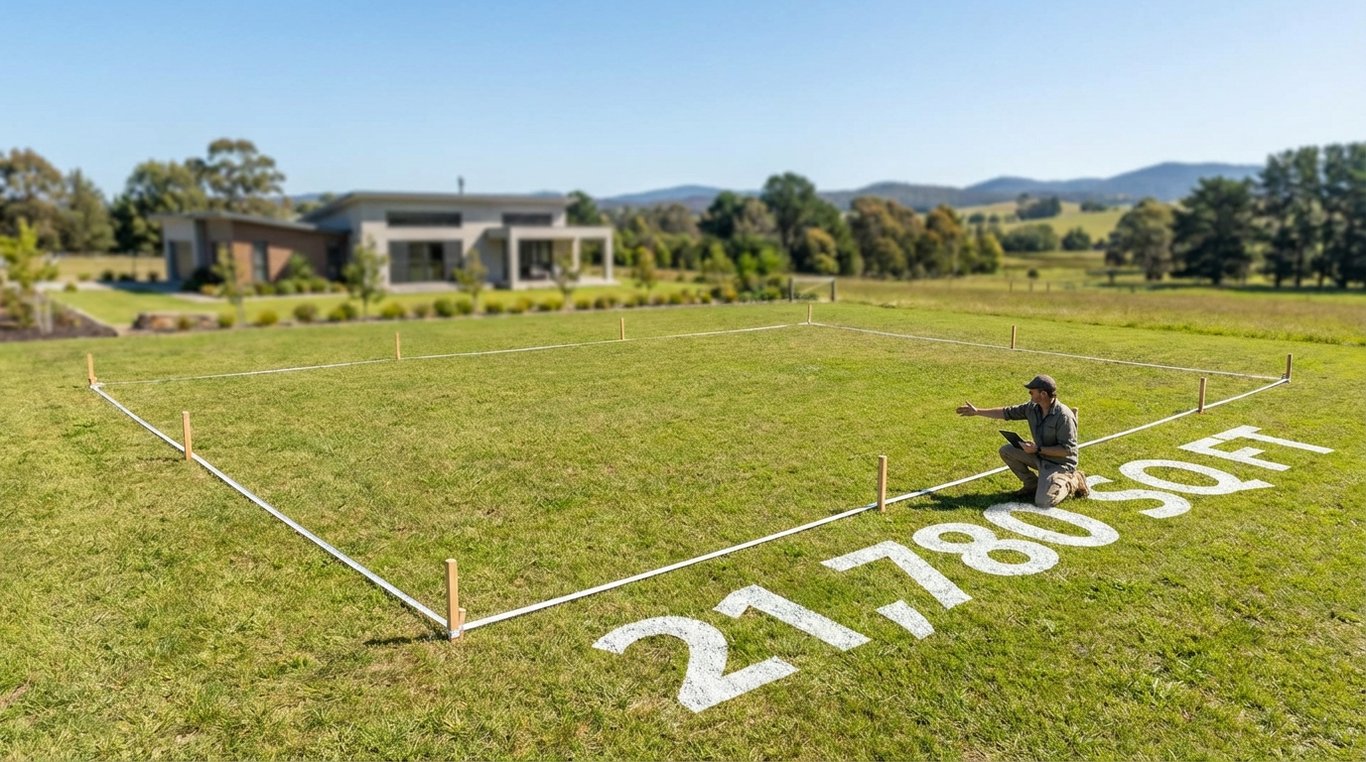

If you are searching for half acre in square feet, the exact answer is simple: half an acre equals 21,780 square feet. That number never changes, whether you see it written as 0.5 acre, one-half acre, or half-acre lot size.
What does change is how that land actually feels and functions in real life. In real estate, 21,780 square feet can translate into a broad, comfortable homesite, a narrow deep parcel, an irregular corner lot, or a property with meaningful limits caused by setbacks, easements, drainage, or slope. Two lots can each be half an acre on paper and still offer very different building options, privacy, and outdoor usability.
That is why understanding the conversion is only the first step. Buyers want to know whether a half-acre lot is enough for a house, pool, detached garage, garden, or extra buffer from neighbors. Sellers and agents want to explain the property clearly without overstating what the land can do. This guide covers the exact math, common lot dimensions, and the practical factors that determine how usable a half-acre parcel really is.
Half acre in square feet: the exact conversion
The base conversion is straightforward:
- 1 acre = 43,560 square feet
- 0.5 acre = 43,560 × 0.5
- Half acre = 21,780 square feet
So if someone asks, “How many square feet are in half an acre?” the correct answer is always 21,780 sq ft.
That certainty is helpful, but acreage alone does not tell the whole story. Square footage measures total area inside the property lines. It does not tell you the lot’s width, depth, shape, frontage, or how much of the site can actually be improved. In residential real estate, those details matter just as much as the raw number.
This is where many online explanations stop too early. They give the math but not the context. For real-world property decisions, a half-acre lot should be evaluated in layers: total land area, buildable area, and usable outdoor space. Those are related, but they are not the same.
Why half an acre does not have one standard length and width
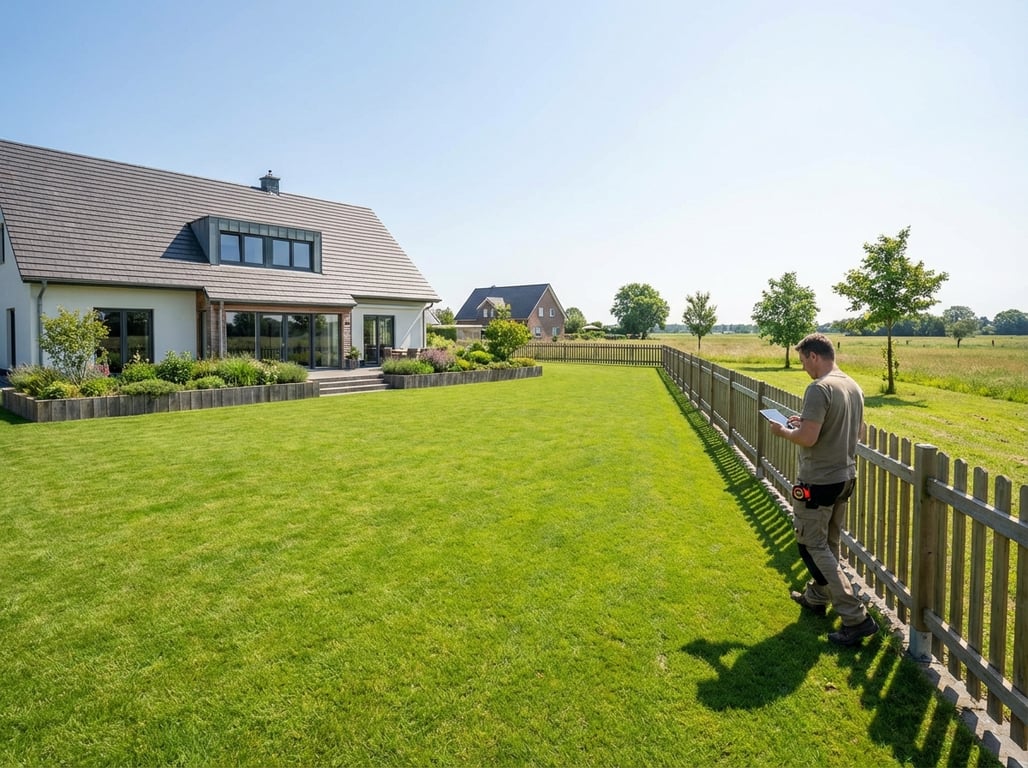
A common follow-up question is, “What are the dimensions of a half-acre lot?” The answer is that there is no single official length and width because acreage measures area, not shape.
A half-acre parcel can be square, rectangular, triangular, pie-shaped, or irregular. As long as the total area equals 21,780 square feet, it is still half an acre. That means one half-acre lot can feel open and balanced, while another can feel tight or awkward even though both contain the same amount of land.
For rectangular lots, the relationship is simple:
Depth = 21,780 ÷ Width
That formula helps convert an abstract area into dimensions you can visualize. But dimensions still do not tell the full story unless you also know where the house sits, what the setbacks are, and whether there are any easements or topographical constraints.
In practice, buyers often assume that “bigger lot” automatically means “more flexibility.” Sometimes that is true, but a poorly shaped half-acre lot can be less functional than a smaller but well-designed parcel. This is especially important in subdivisions where frontage, side-yard setbacks, and driveway layout influence how the lot lives day to day.
Common half-acre lot dimensions in feet
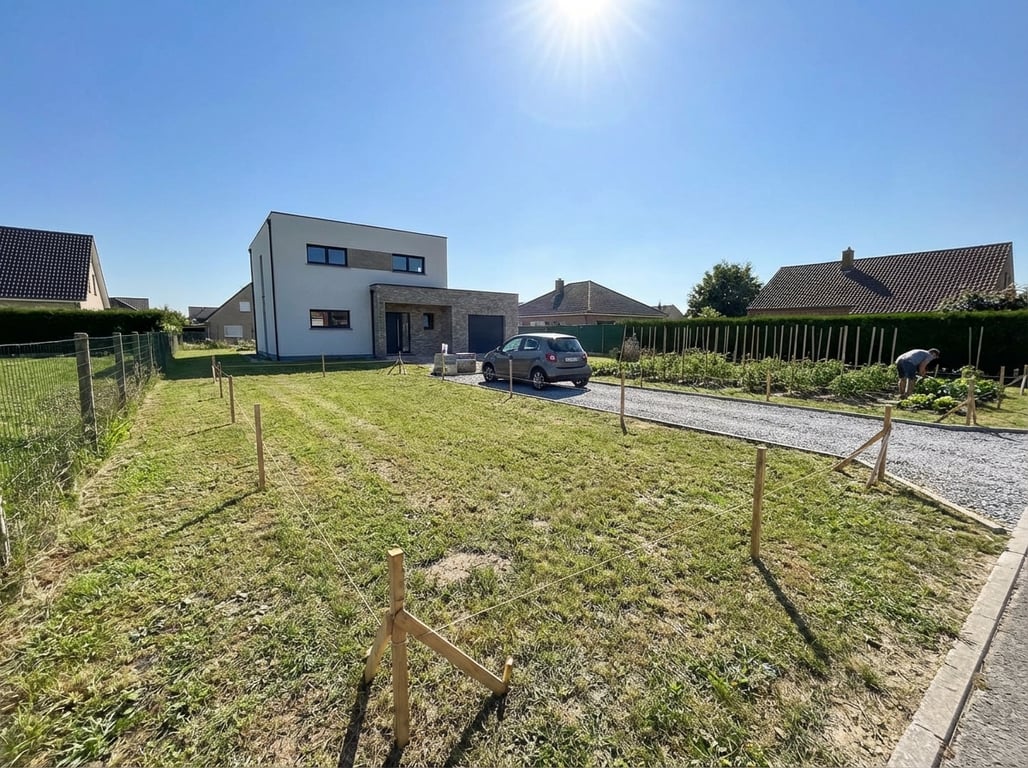
Here are several rectangular examples that all equal 21,780 square feet:
| Lot width (ft) | Approx. depth for 0.5 acre (ft) |
|---|---|
| 80 | 272.25 |
| 100 | 217.8 |
| 120 | 181.5 |
| 150 | 145.2 |
| 180 | 121 |
| 200 | 108.9 |
These examples show how the same area can produce very different site experiences. A lot that is 80 feet wide and 272.25 feet deep may feel long and narrow, with less flexibility for a wide home footprint. A lot that is 200 feet wide and 108.9 feet deep offers broad frontage and can allow a more expansive house shape, but it may not deliver the same sense of depth behind the home.
A 150-foot by 145.2-foot parcel often feels more balanced because the width and depth are closer together. Still, “balanced” is not automatically best. A wider lot may work better for a ranch-style home, side-entry garage, or circular drive. A deeper lot may be better if the goal is a larger backyard or greater separation from the street.
When comparing listings, dimensions can tell you more than acreage alone. If available, review the plat or survey rather than relying only on the rounded acreage shown in marketing remarks.
What 21,780 square feet really means on a residential lot
When people hear 21,780 square feet, they often picture one large uninterrupted yard. Residential property rarely works that way. The total lot area usually includes the house footprint, garage, driveway, setbacks, utility areas, drainage features, and land that may be less useful because of grade or vegetation.
A practical way to think about a half-acre lot is to separate it into three layers:
- Total area: the full 21,780 square feet
- Buildable area: the portion where local rules and site conditions allow improvements
- Usable area: the space that comfortably functions for daily living
Those three numbers are often quite different. For example, a home with a large footprint, front setback, long driveway, and septic field may leave less open yard than a buyer expects. On another parcel, the same half-acre size might provide generous outdoor living space because the lot is wide, flat, and free of major constraints.
This distinction matters in conversations about value. A listing that emphasizes “half acre” may be accurate, but buyers still need to know whether the lot is mostly open, heavily wooded, sloped, irregular, or burdened by easements. The raw area number is important, but it is not the whole product being sold.
Why two half-acre lots can feel completely different
The biggest reason two half-acre lots feel different is that land usability is shaped by more than square footage. Frontage is one major factor. A wider lot may create better separation from neighbors, more options for garage placement, and a broader backyard shape. A narrow lot with the same total area can feel constrained once side setbacks are applied.
Setbacks are another major factor. Local zoning rules may require minimum distances from the front, rear, and side property lines. Those setback lines reduce the buildable envelope, especially on narrower parcels. A lot can have 21,780 square feet and still be surprisingly limiting if the house, pool, or detached structure must fit inside a compressed rectangle.
Easements can also change the practical value of the site. Utility easements, drainage easements, access easements, and conservation restrictions may not reduce official acreage, but they can reduce what an owner can build or alter. In other words, you may own the land but not control every use of it.
Topography matters just as much. A flat half-acre lot often feels substantially more usable than a steep half-acre lot. Slopes can affect drainage, patio design, retaining wall costs, lawn maintenance, and where additions or accessory structures can go. The same applies to floodplain issues, wetlands, and tree preservation rules.
Finally, house placement changes the experience of the lot. A home set deep on the site creates a different living pattern than one placed closer to the street. The same parcel can offer a big front yard and small backyard, or the reverse, depending on layout choices.
How a half-acre lot compares in everyday use
For many homeowners, half an acre sits in a practical middle ground. It often feels noticeably more spacious than a small suburban lot, while remaining easier to maintain than a full acre or larger tract. In many markets, that makes it attractive to buyers who want some breathing room without taking on excessive land care.
Context matters, though. In a neighborhood where lots are 5,000 to 8,000 square feet, 21,780 square feet may feel large. In a semi-rural area where one-acre lots are common, half an acre may feel modest. Buyer expectations are shaped by the local market, not just by math.
A well-configured half-acre lot can often support a house, driveway, patio, recreation area, landscaping, and some privacy from neighboring homes. It may also allow for a pool, workshop, or detached garage where zoning permits and the layout works. But none of those uses should be assumed from acreage alone.
This is where professionals can add value. Rather than simply repeating that the lot is “huge” or “spacious,” it is better to explain what the parcel actually offers: lot width, backyard depth, tree coverage, grading, and whether there is meaningful room for future improvements.
Estimating what fits on a 0.5-acre lot
One reason people search for half acre in square feet is that they want to know whether a specific plan will fit. Can the property handle a larger house? Is there enough room for a pool and patio? Could a detached garage or accessory building work?
In broad terms, half an acre is often a versatile lot size. But the answer depends on the relationship between the desired improvement and the lot’s buildable area. A one-story home with a wide footprint may need more width than a two-story plan. A pool needs not only physical space, but also clearance from easements, septic systems, and required setbacks. A detached garage may be possible on one half-acre lot and impossible on another.
Septic is a major example. On properties without public sewer, the drain field and reserve area can consume more space than buyers anticipate. Drainage swales, stormwater features, or protected tree areas can also reduce the portion of the lot that feels truly available.
If you are evaluating a property for a specific use, the best documents are the survey, plat map, and any site plan submitted to the local jurisdiction. Those will usually reveal the lot lines, dimensions, utility areas, and restrictions more clearly than listing photos ever can. If you need a broader land-size comparison, it can also help to understand how lot dimensions relate to acreage or review square-foot conversions for common lot sizes.
A practical way to visualize half an acre
Many buyers struggle to picture 21,780 square feet because the number is abstract. A more useful approach is to mentally place the major site elements in sequence.
Start with the house footprint. Then add the driveway and parking area. Next consider the required setbacks on all sides. After that, think about outdoor zones such as a patio, lawn, play area, garden, or pool. Once those pieces are layered onto the site, the remaining open space becomes easier to understand.
Here are three simple examples:
- 100 ft × 217.8 ft: longer front-to-back feel
- 150 ft × 145.2 ft: more balanced proportions
- 200 ft × 108.9 ft: wider frontage, shallower depth
All three are half-acre lots, but each creates a different layout experience. That difference becomes even more noticeable once the house is placed and local restrictions are applied.
This is also why a site visit matters. A parcel that looks generous on a plat may feel smaller in person if there is a steep rear slope, heavy tree cover, or an awkward side-yard condition. By contrast, a well-shaped lot can feel larger than the numbers suggest because the usable open space is organized efficiently.
What buyers, sellers, and agents should verify
Acreage is a useful headline, but due diligence should go beyond the simple conversion. Buyers should confirm the dimensions of the lot, not just the total area. Width, depth, shape, and frontage can influence everything from house design to resale appeal.
They should also verify local zoning and setback requirements before assuming the lot can support a future addition, pool, shed, fence, or detached structure. If the property has septic, floodplain exposure, wetlands, or utility easements, those details should be reviewed early.
Sellers and agents benefit from understanding these same issues because accurate positioning leads to better buyer expectations. Instead of relying only on “0.5 acre” in listing copy, it is more helpful to mention features such as wide frontage, level yard, deep rear setback, mature tree buffer, or usable open area behind the home. Those details explain the value of the land more clearly than acreage alone.
In short, the number 21,780 square feet answers the mathematical question, but real estate decisions depend on how that square footage is distributed and constrained. That is what turns a lot size into a lifestyle question.
FAQ
How many square feet are in half an acre?
Half an acre equals 21,780 square feet. The calculation comes from the standard conversion of 1 acre = 43,560 square feet.
What are the dimensions of a half-acre lot?
There is no single fixed dimension because half an acre is an area measurement, not a shape. Examples of rectangular half-acre lots include 100 ft × 217.8 ft, 150 ft × 145.2 ft, and 200 ft × 108.9 ft.
How do you calculate half acre in square feet?
Multiply the number of acres by 43,560. For half an acre, the formula is 0.5 × 43,560 = 21,780 square feet.
Is half an acre enough for a house and a pool?
Often yes, but not always. The answer depends on the lot’s shape, width, setbacks, easements, topography, septic layout, and the size of the home. A well-configured half-acre lot can support both, but each parcel should be reviewed individually.
Why can one 0.5-acre lot feel larger than another?
Two parcels can have the same area but different frontage, depth, house placement, slope, or restrictions. A wider, flatter lot with fewer easements often feels more usable than a narrow or constrained lot of the same size.
Is a half-acre lot the same as having a huge backyard?
No. The full 21,780 square feet includes the house footprint, driveway, setbacks, and any constrained areas. The actual backyard may be much smaller than the total lot size suggests.
A half-acre lot is exactly 21,780 square feet, but that number is only the beginning of the story. In real estate, the more important question is how the lot is shaped, where the buildable area sits, and how much of the parcel is truly usable for everyday living.
That is why half-acre properties can vary so much in feel and function. The same area can produce a broad, flexible homesite or a lot with meaningful planning limits. When comparing properties, use the conversion as your starting point, then evaluate dimensions, setbacks, topography, easements, and house placement to understand what the land can really do.