


If you are researching the phrase blog/free house floor plan creator for real estate listings, you are probably not looking for abstract software commentary. You are trying to solve a real listing problem: buyers cannot fully understand a property from photos alone. In digital-first real estate marketing, that gap matters. A home can be beautifully photographed, professionally staged, and accurately described, yet still leave buyers uncertain about how the rooms connect, how private spaces are separated, or whether the overall layout fits their lifestyle.
That uncertainty can slow interest before a showing is ever booked. For agents, brokers, listing coordinators, and marketing teams, a floor plan helps turn scattered visual impressions into a coherent picture of how the home actually lives. It gives structure to the listing. It helps buyers see flow, circulation, room relationships, and level changes in a way that photography rarely can on its own.
This is why a free house floor plan creator deserves serious attention in real estate. Used well, it is not just an add-on graphic. It is a practical communication tool that can improve listing clarity, reduce confusion, and support better-qualified inquiries. The real question is not whether free options exist, but whether they are accurate, efficient, and polished enough to support the standards of professional property marketing.
Why blog/free house floor plan creator for real estate listings matters in modern property marketing
A listing succeeds when buyers can quickly understand both emotional appeal and practical fit. Photography usually handles the emotional side. It captures light, finishes, texture, staging, and mood. But photos are weak at explaining the structure of a home. They do not reliably tell buyers whether the secondary bedrooms sit near the primary suite, whether the kitchen opens directly to the family room, or whether a lower-level recreation area feels integrated with the rest of the house.
That is where floor plans become valuable. They organize the home into something legible. Instead of asking buyers to mentally stitch together a hallway from one image, a kitchen from another, and a staircase from a third, a plan presents the layout in one glance. It removes guesswork and gives buyers a stronger sense of how the property functions in everyday life.
This matters even more in a market where many prospects begin with a fast online comparison of multiple homes. When buyers scroll through similar price points, they do not always spend time decoding complex layouts from image galleries. A listing that communicates clearly has a meaningful advantage over one that creates friction. Clarity does not guarantee a sale, but confusion often weakens momentum.
For real-estate professionals, that means a floor plan is not just a design extra. It is part of buyer education. It can improve the quality of inquiries because prospects who contact the listing are more likely to understand what they are seeing. It can also reduce mismatched expectations at showings, especially in homes with additions, unconventional circulation, split-bedroom layouts, or finished lower levels.
What a free floor plan tool can realistically do for agents
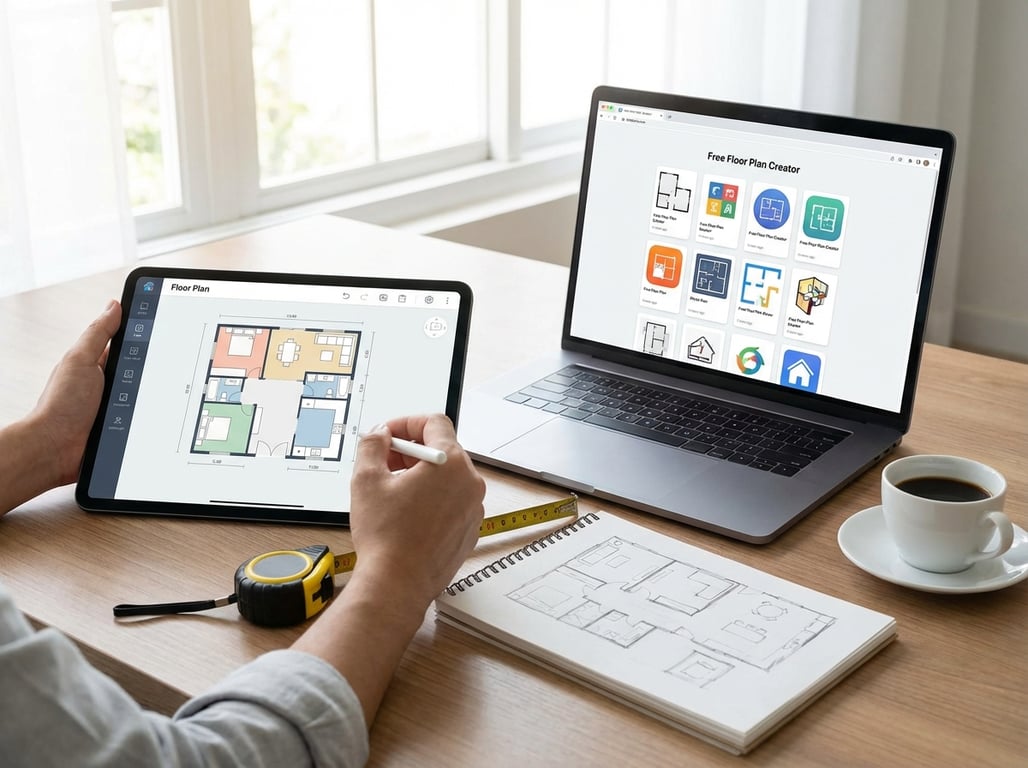
A free floor plan creator can be highly effective when the goal is listing communication rather than technical drafting. Most residential marketing does not require construction-grade documents. It requires a clean, readable plan that helps buyers understand space. If a free platform can accurately place walls, openings, labels, and major room relationships, it may be enough for many everyday listings.
This is especially true for standard property types such as condos, townhomes, ranch homes, and simple two-story residences. In these settings, the plan’s job is to clarify flow and room placement, not to serve as a legal or architectural record. A clear 2D floor plan often delivers most of the value buyers need.
The challenge is that “free” can mean different things in practice. Some platforms offer genuinely usable outputs at no cost. Others provide only a limited experience unless users accept watermarks, low-resolution exports, restricted room editing, or tight project caps. From a marketing perspective, those limits matter because the floor plan must work across MLS systems, property websites, brochures, social posts, and email campaigns.
A good way to judge whether a free solution is worthwhile is to ask a simple operational question: can your team create a buyer-friendly, listing-ready plan quickly and consistently? If the answer is yes, then free may be more than sufficient. If the answer is no because too much time is spent fixing geometry, adjusting labels, or improving exports, then the tool may not fit a professional workflow even if the price is attractive.
For a broader look at use cases across buyer marketing and renovation discussions, Free House Floor Plan Creator: Best Uses for Real Estate Listings, Renovations, and Buyer Marketing expands on where these tools add the most value.
How to evaluate a free floor plan workflow before using it in live listings
The most common mistake agents make is evaluating tools by feature lists alone. In actual listing operations, workflow matters more than menus. A platform may advertise 2D, 3D, furnishing libraries, and customization options, but still be a poor fit if it takes too long to produce a clear plan under deadline pressure.
Usability should be the first standard. Most real estate teams do not have trained drafters. The tool should be intuitive enough that an agent, assistant, or marketing coordinator can create a presentable floor plan without a steep learning curve. Everyday tasks such as drawing walls, placing doors, naming rooms, adjusting dimensions, and exporting a final version should feel straightforward rather than technical.
Export quality is equally important. What looks acceptable inside a platform may degrade once uploaded elsewhere. Labels can become unreadable on mobile screens. Lines can blur in brochures. The visual hierarchy can collapse when compressed by listing portals. This is why a floor plan must be tested where buyers will actually see it, not just where it is built.
Accuracy also deserves more attention than many teams give it. A floor plan used in marketing does not need to function as a survey or permit document, but it should still represent the home honestly. Buyers will trust the plan because it appears authoritative. That means major room relationships, stair orientation, openings, and level separation should be reviewed carefully. A polished but inaccurate plan can do more damage than no plan at all.
Another overlooked factor is branding control. Some free tools force visible platform marks or rigid styling templates that may clash with an agent’s listing presentation. That may not matter for every property, but it matters a great deal in premium marketing where consistency and polish influence how the home is perceived.
Where floor plans create the strongest marketing advantage
Not every listing benefits equally from a floor plan, but many do. The greatest value appears when layout plays a central role in buyer decision-making. Properties with unusual circulation, multi-generational potential, dual home offices, detached studios, finished basements, guest suites, or flexible bonus rooms often need more explanation than photos can provide.
Consider a home with a beautiful renovated kitchen and strong photography throughout. Buyers may still hesitate if they cannot tell whether the kitchen opens to the main gathering space or sits apart from it. The same issue appears in homes where one bedroom is tucked above a garage, where a finished lower level includes a bath and separate entrance, or where a den might function as a nursery, office, or fourth sleeping area depending on the buyer’s needs. A floor plan makes those possibilities easier to assess.
Remote and relocation buyers gain particular value from this kind of clarity. They often make shortlists from digital materials alone and cannot casually visit to resolve confusion. For them, a floor plan is not just helpful; it may be one of the main tools used to decide whether a property deserves a deeper look.
Floor plans also support better conversations around renovation and furniture planning. In vacant homes, buyers use them to imagine how a sectional, dining table, or work-from-home setup might fit. In older homes, they can make renovation opportunity easier to understand by showing the existing arrangement clearly before any future changes are considered. How to Create a Floor Plan Free for Listing Marketing and Renovation Planning is useful for teams that want a more structured workflow around that process.
The hidden costs and risks of relying on free solutions
The main risk of free software is not always poor quality. Often, it is hidden labor. A tool may seem cost-effective until the team starts spending excessive time correcting walls, relabeling rooms, resolving export issues, or compensating for limited design controls. At that point, the product is no longer truly free. The cost has simply shifted from software spend to staff time.
There is also the risk of oversimplification. Some tools generate plans that look clean at first glance but omit nuances that matter to buyers. Hallways may appear shorter than they feel in person. Additions may be represented too neatly. Room connections may be technically shown but not communicated clearly enough for quick understanding. In marketing, subtle distortions can create disproportionate confusion.
Automated and scan-based floor plan generation introduces another issue. These systems can accelerate capture, but they should not be treated as self-validating. Older homes, irregular walls, partially open spaces, and converted rooms can produce errors. Human review remains essential, especially before publishing a plan in a listing package where buyers may treat it as a trusted representation of the property.
Compliance and disclosure should be part of the conversation too. If dimensions are estimated, that should be indicated. If the plan is illustrative rather than exact, the wording should make that clear. Real-estate marketing works best when it improves understanding without overstating certainty. That protects the seller, the buyer, and the agent.
Building a repeatable floor plan process inside a real estate team
The real advantage of adopting a floor plan tool is not creating one impressive plan. It is establishing a repeatable process that supports many listings over time. Teams that standardize their floor plan workflow usually create more consistent marketing and make fewer avoidable mistakes.
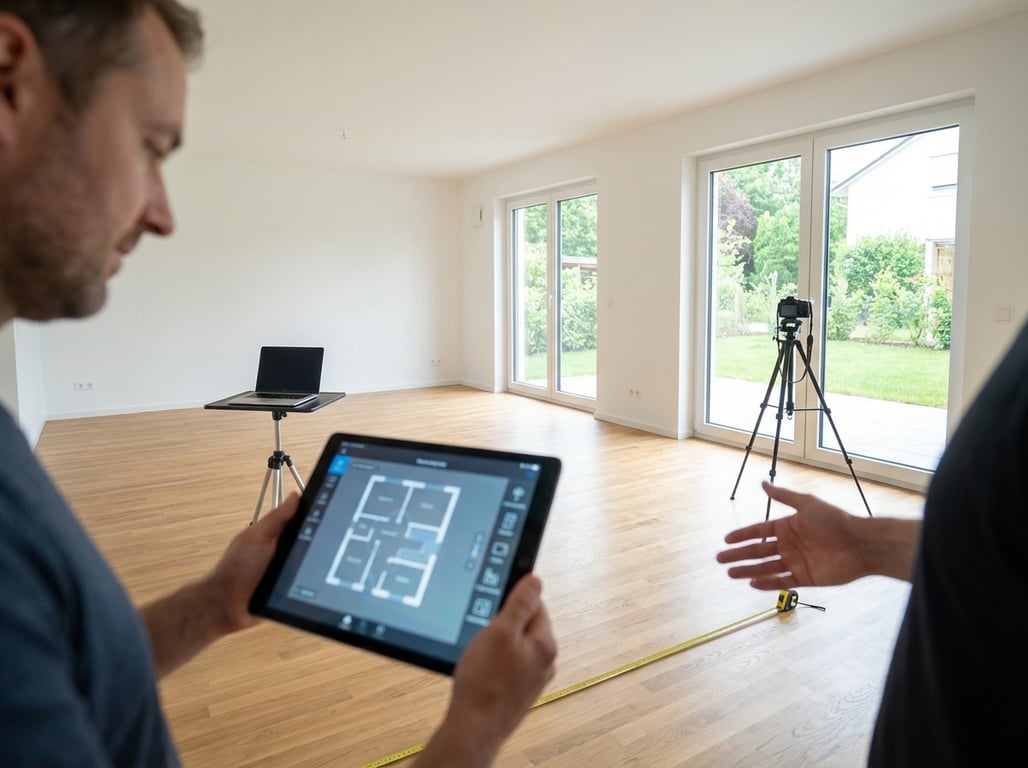
That process should begin with source data. Whether measurements come from an on-site walkthrough, builder documents, prior marketing materials, or scan-assisted capture, someone should verify key room relationships before publication. The goal is not architectural perfection. The goal is dependable buyer-facing clarity.
Next comes naming consistency. Real-estate teams often create confusion by labeling similar spaces differently from one listing to another. One plan may say “Office,” another “Den,” another “Bedroom 4,” even when the spaces are functionally similar. A naming standard helps buyers interpret plans more easily and gives marketing materials a more professional feel.
Export standards are just as important. Teams should decide what dimensions, file types, and visual formats are needed for MLS systems, print brochures, websites, and social channels. Without those standards, a well-made plan can lose value as it moves through publishing environments that compress or crop the file differently.
Finally, there should be a short review checkpoint before anything goes live. That review should confirm room labels, general accuracy, readability at mobile size, orientation, and appropriate disclaimer language where needed. This kind of discipline turns the floor plan from an occasional extra into a dependable listing asset.
When free is enough and when upgrading makes business sense
Free is often enough for professionals handling a moderate number of straightforward residential listings. If the homes are simple in layout and the platform can produce clear plans quickly, then the practical value may be strong. Solo agents, small teams, and occasional users can often get what they need without paying for advanced drafting features they may never use.
Upgrading becomes more sensible when one of three things changes. The first is complexity. Unusual architecture, multi-level additions, detached living areas, or custom homes often demand better editing control. The second is quality expectation. Higher-end listings generally need more polished visuals and stronger brand consistency. The third is scale. Once a team produces floor plans frequently, time savings begin to matter as much as software price.
A useful business test is to compare platform limitations with labor cost. If a free tool requires an extra hour or two of correction on every listing, that hidden cost may quickly exceed the price of a paid option. In that case, paying for better output is not an indulgence. It is a workflow decision.
The best choice is therefore not the cheapest tool or the most advanced one. It is the one that aligns with the type of listings you market, the speed your team needs, and the level of quality your clients expect.
FAQ
Is a free floor plan creator good enough for buyer-facing real estate listings?
Yes, in many cases it is. For standard residential properties, a free floor plan creator can be fully adequate if it produces a clean, readable, and reasonably accurate layout. What matters most is not whether the tool is free, but whether the final plan helps buyers understand the home without distracting quality issues such as blurry exports, cluttered labels, or obvious inaccuracies.
Should listing floor plans include exact room dimensions?
Only when those dimensions have been verified to a reasonable standard. Many marketing floor plans are useful even without exact measurements because their main role is to explain layout and flow. If dimensions are included, it is wise to clarify that they are approximate unless you have a solid basis for greater precision.
Are automatically generated floor plans safe to publish without review?
Usually not. Automated capture can save time, but it should still be reviewed carefully. Complex layouts, older homes, open transitions, and converted spaces can all produce errors that need human correction. Automation is best treated as a starting point rather than a final draft.
What do buyers understand better when a listing includes a floor plan?
They understand how the home works. A floor plan helps them see room relationships, traffic flow, privacy separation, and functional possibilities more clearly than photos alone. That often leads to stronger confidence and better-quality inquiries because buyers can assess fit earlier in the process.
A floor plan earns its place in a listing package when it makes a property easier to understand without making your workflow harder to manage. That is the real value behind blog/free house floor plan creator for real estate listings. For real-estate professionals, the most effective solution is the one that balances clarity, speed, and trust. When buyers can understand a home more quickly, your marketing does more than attract attention. It helps move serious prospects toward action.